



Here are some of our favorite books about bulbs, heirloom flowers, and garden history. We hope you’ll enjoy and learn from them, and we invite you to email us your recommendations in return!
1. Scott’s “Best Books for Antique Gardeners”
2. Recommendations from Our Newsletter and Customers
Best Books for Antique Gardeners, by Scott Kunst
This short but wide-ranging list is distilled from my twenty-five years of studying historic landscapes and plants. You can borrow virtually all of these books from your local library via the wonders of inter-library loan. Many are still in print, and used copies, reprints, and scanned copies of most of the others can be picked up inexpensively at AbeBooks.com, Alibris.com, or Amazon.com.
(Mostly) American Landscape History
Adams, William Howard. Nature Perfected: Gardens Through History (1991). World-wide overview.
Beveridge, Charles, & P. Rocheleau. Frederick Law Olmsted: Designing the American Landscape (1995). A lavish volume on America’s most famous landscape architect.
Birnbaum, Charles, & R. Karson. Pioneers of American Landscape Design (2000). 160 biographies, with period photos and plans.
Brown, Jane. Gardens of a Golden Afternoon (1982). In scores of magnificent gardens designed between 1891 and1937, Gertrude Jekyll and Edwin Lutyens defined the “cottage garden” style.
Griswold, Mac. Golden Age of American Gardens (1991). Brief garden histories of hundreds of 1890-1940 estates illustrated with historic hand-colored photos.
Hill, May. Furnishing the Old-Fashioned Garden (1998). A sampling of historic garden structures and furnishings. See also Grandmother’s Garden (1995), an art historian’s view of the gardens of and painted by artists from 1865-1915.
Israel, Barbara. Antique Garden Ornament (1999). American garden artifacts from 1740-1940, by the leading US dealer in garden antiques.
Leighton, Ann. Early American Gardens (1970), American Gardens in the 18th Century (1976), and American Gardens of the 19th Century (1987). A pioneering, authoritative, and highly readable trilogy. The first volume — about Leighton’s native New England — is the best.
Punch, Walter. Keeping Eden: A History of Gardening in America (1992). Diverse and enjoyable chapters by an array of experts, and beautifully illustrated.
Sanecki, Kay. History of the English Herb Garden (1992). Herb gardens are widely misrepresented at museum sites across the country. Though British-based, Sanecki’s book offers a more factual view.
Tucker, David. Kitchen Gardening in America: A History (1993). One of very few books on the history of family vegetable gardening.
Watts, May Theilgaard. Reading the Landscape of America (revised edition, 1975; originally Reading the Landscape, 1959). A field ecologist’s insights into the landscapes all around us. Entertaining, eye-opening, and one of my favorite books!
Westmacott, Richard. African-American Gardens and Yards in the Rural South (1993). Present and past; a fascinating, model study.
Researching and Restoring Landscapes
Adams, Denise, and Laura Burchfield. American Home Landscapes: A Design Guide to Creating Period Garden Styles (2013). Excellent and accessible guide for homes from 1620-2000, with hundreds of historic images.
Birnbaum, Charles. Protecting Cultural Landscapes (Preservation Brief 36). Excellent introduction to protecting all sorts of historic landscapes, free online at http://www.nps.gov/tps/how-to-preserve/briefs/36-cultural-landscapes.htm .
Birnbaum, Charles, and C. Wagner. Making Educated Decisions 2: A Landscape Preservation Bibliography (2000). Essential for serious work. Order at http://bookstore.gpo.gov/products/sku/024-005-01206-1 or view it online at archive.org/details/makingeducatedde00mak.
Favretti, Rudy and Joy. Landscapes and Gardens for Historic Buildings (revised edition, 1991). The best available guide for researching and restoring home landscapes up to 1930, with extensive plant lists. The Favrettis’ earlier For Every House a Garden is also excellent.
Haltom, Susan, and Jane Roy Brown. One Writer’s Garden (2010). The inspiring story of restoring author Eudora Welty’s garden, set within the broader history of gardening and America.
Rogers, Elizabeth Barlow. Rebuilding Central Park: A Management and Restoration Plan (1987). A model for reviving historic parks, by the pioneering leader of Central Park’s renaissance.
Stokes, Samuel, et al. Saving America’s Countryside: A Guide to Rural Conservation (second edition, 1997). A comprehensive guide to preserving farmland, farm buildings, and rural life.
Strangstad, Lynette. A Graveyard Preservation Primer (second edition, 1995). An excellent short guide by one of the country’s leading experts on preserving historic cemeteries.
White, Jane Baber. Once Upon a Time: A Cemetery Story (2009). Bringing a neglected graveyard back into the life of its community by introducing a multitude of activities from bird-watching to weddings.
Yamin, Rebecca, & Karen Metheny. Landscape Archaeology: Reading and Interpreting the American Historical Landscape (1996). Amazing new techniques for studying vanished landscapes, with scholarly case studies.
Historic Plants
Adams, Denise. Restoring American Gardens (2004). Big, beautiful, and carefully researched encyclopedia of historic ornamental plants. Outstanding!
Coats, Alice. Flowers and Their Histories (1956), and Garden Shrubs and Their Histories (1964, reprinted 1992). Pioneering works. Both are engagingly readable and superb.
Dickerson, Brent. The Old Rose Advisor (1992). Encyclopedia of over 2000 antique roses with original descriptions, images, and other documentation.
Duthie, Ruth. Florists’ Flowers and Societies (1988). “Florists” were amateur enthusiasts who, from about 1600-1900, competed in the breeding and showing of hyacinths, tulips, dahlias, anemones, ranunculus, pansies, primroses, and pinks.
Greene, Wesley. Vegetable Gardening the Colonial Williamsburg Way (2012). History and how-to from the man behind Williamsburg’s teaching garden, expert and engaging.
Mahan, Clarence. Classic Irises and the Men and Women Who Created Them (2006). In-depth history by a master researcher and iris lover.
Martin, Tovah. Old-Fashioned Flowers (2000). This Brooklyn Botanic Gardens handbook is the best short introduction to the topic, and it starts with a chapter on Old House Gardens!
Pavord, Anna. The Tulip, 1999. A massive, in-depth history, sumptuously illustrated.
Spongberg, Stephen. A Reunion of Trees (1990). A richly illustrated history of trees, shrubs, plant explorers, and Harvard’s Arnold Arboretum.
Stuart, David, and James Sutherland. Plants from the Past (1987). A breezy, informed volume by two British heirloom plant collectors and nurserymen. See also Gardening with Heirloom Plants (1997) by David Stuart.
Weaver, William Woys. Heirloom Vegetable Gardening (1997). Authoritative overview by a well-known American culinary historian.
Welch, William, and Greg Grant. The Southern Heirloom Garden (1995). Multiple chapters explore the various cultural influences on Southern gardens, but even better is the complete — and entertaining — encyclopedia of plants.
Welch, William, and Greg Grant. Heirloom Gardening in the South (2011). Valuable for gardeners throughout the country, with an extensive encyclopedia of plants. This is an expanded reworking of The Southern Heirloom Garden (1995), and the two books are different enough that enthusiasts will want both.
Reprinted Works
To really know the past, go directly to the source.Originals and traditional reprints — including those listed here — can be found at book-sellers such as AbeBooks.com and Alibris.com; many scanned, print-on-demand reprints are available at Amazon.com (see, for example, those for the rare Manual on the Iris); and you can read or buy hundreds of thousands of digitized books and magazines at books.google.com.
Bourne, Herman. The Florist’s Manual, 1833 (1988). “Florist” meant amateur flower-lover. This small book details scores of flowers for American gardens.
Burr, Fearing. Field and Garden Vegetables of America, 1865 (1989). A monumental tome covering 1100 varieties, including herbs (which he often says are “rarely grown today.”
Downing,A.J.Theory and Practice of Landscape Gardening,1841(1977). Enormously popular and influential, Downing brought the romantic Victorian landscape into mainstream American yards. See also Victorian Cottage Residences, 1842/73 (1981).
Earle, Alice Morse. Old Time Gardens, Newly Set Forth,1901 (2005). Looking back to gardens of the past 200 years, Earle helped inspire the new century’s growing interest in traditional design and old-fashioned plants.
Gerard, John. The Herbal, 1597/1633 (1975). This immense work includes virtually every garden plant known in England at the time. With hundreds of woodblock illustrations.
Jekyll, Gertrude. Colour Schemes for the Flower Garden, 1908 (1983). Arguably the best introduction to this revered master of the perennial garden. Many of her other books have been reprinted, too.
Jensen, Jens. Siftings, 1949 (1990). Collected writings by the visionary “Prairie-style” designer and conservationist.
Parkinson, John. Garden of Pleasant Flowers (Paradisi in Sole Paradisus Terrestris), 1629 (1991). Huge, landmark florilegium, profusely illustrated with woodblock prints.
Robinson, William. The Wild Garden, 1870 (Expanded Edition, by Rick Darke, 2009). A ground-breaking work that helped shape the course of 20th-century gardening.
Scott, Frank J. Victorian Gardens : The Art of Beautifying Suburban Home Grounds, 1870 (1982). Originally published as simply The Art of Beautifying Suburban Home Grounds, this guide to stylish home landscapes was almost as popular as A.J. Downing’s books had been earlier. With many plans.
Wilder, Louise.Color in My Garden, 1918 (1990). Perennial gardening and more, by “the American Gertrude Jekyll.” Also excellent: Adventures with Hardy Bulbs, 1936 (1990, 1998).
Recommendations from Our Newsletter and Customers
Here you’ll find “Book of the Month” recommendations from our newsletter, books we’ve sold in the past, and books recommended by our readers and customers. Happy reading!
Stay Home and Read a Good Garden Book
Small comforts are more important than ever these days – FaceTime with a loved one, an hour in the garden, scoring a few rolls of real toilet paper.
Books are high on my list of pandemic essentials, too, offering a welcome short-term escape into other worlds. Here are a two of recent gems you might enjoy.
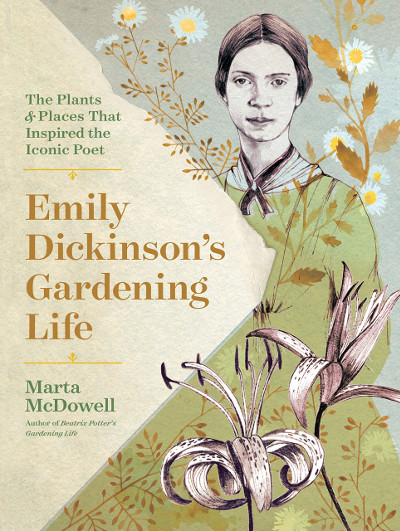
Emily Dickinson’s Gardening Life – Despite living most of her life in self-imposed lockdown, Emily Dickinson still managed to create extraordinary poetry. In this revised, expanded, and much more richly illustrated version of her 2004 Emily Dickinson’s Gardens, our good friend Marta McDowell traces the poet’s life in tandem with a year in her garden, from the first signs of spring to the hyacinths she loved forcing into winter bloom.
As Anne Marie Van Nest wrote in a recent review in The American Gardener, “Each layer of Dickinson’s life is revealed with connections made to her beloved plants and gardens through her many poems which are reprinted throughout the book.” McDowell also includes “a visitor’s guide to Dickinson’s garden in Amherst as well as copious details about her favorite plants so that readers can recreate their own poet’s garden….
“Filled with a mixture of contemporary and historic photos depicting Dickinson’s garden and plants as well as family photos, the book also includes color botanical illustrations from three female New England artists whose lives overlapped with Emily Dickinson’s – a fitting addition.”
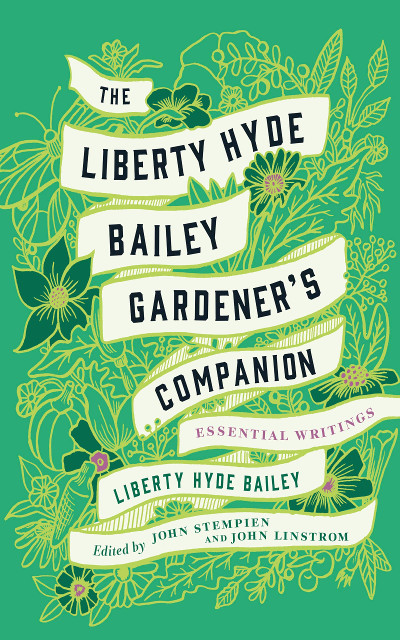
The Liberty Hyde Bailey Gardener’s Companion – Born on a small farm in Michigan, Liberty Hyde Bailey went on to become, as Nancy Rose writes in The American Gardener, a celebrated “botanist, professor, gardener, and one of the leading forces” in horticulture from the late 1800s well into the 20th century.
Bailey writes in The American Gardener, he also “wrote voluminously” – including more than 70 books – and in this compendium “editors John A. Stempien and John Lindstrom have brought together some of Bailey’s most accessible and inspirational pieces to create an excellent introduction ... to his work.”
It’s “eminently readable, and the topics are timeless,” Rose says – and I definitely agree. Bailey “seems amazingly prescient,” for example, “in his thoughts on ‘modern’ subjects like the need for environmental conservation and acknowledging the mental health benefits of nature and gardening….
“This book will be relished by gardeners, both novice and experienced, who will smile and nod knowingly at Bailey’s descriptions of the smell of newly-turned soil, the miracle of watching a seed sprout, or the feeling of pure contentment” – and comfort – “that a garden can bring.” (April 2020)
Book of the Month: Peonies – Beautiful Varieties for Home and Garden
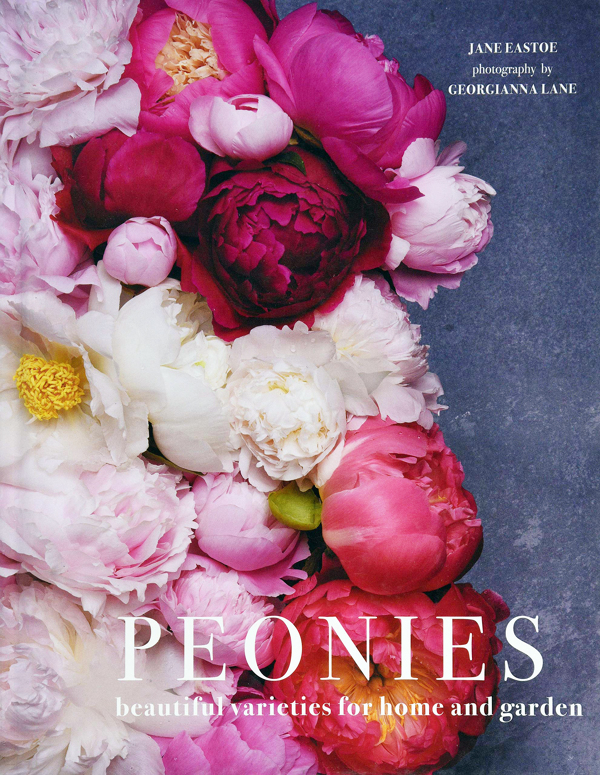
If you’re not quite ready for peony season to be over – or if you’re already telling yourself that this fall you really are going to add a couple of extra-special ones to your garden – here’s a book you may find both comforting and inspiring.
As I wrote in March about its companion volume, Dahlias, it’s “a gorgeous book, filled to overflowing with spectacular, full page images that are sure to get a gardener’s heart pounding.” These include close-ups of each of the 53 featured varieties as well as shots of peonies blooming en masse in the growers’ fields or artfully combined into exquisite bouquets. Photographer Georgianna Lane is a master at capturing the inner glow and subtle shadings of peonies which makes them come alive on the page.
Although Jane Eastoe’s text is full of historical tidbits, mostly about the diverse breeders who created these well-loved flowers, there are puzzling errors. For example, Eastoe says that ‘Miss America’ is “one of the easiest varieties to propagate by seed,” even though seed-grown peonies virtually never come true from seed, and she describes ‘Karl Rosenfield’ as a peony that should spring to mind when someone says “think pink,” even though ‘Karl Rosenfield’ is usually described as deep red.
Ah, but those magnificent photographs! Although Peonies isn’t a perfect book, I’d say it’s well worth the $16.82 Amazon charges for it. (June 2019)
Book of the Month: Dahlias: Beautiful Varieties for Home and Garden
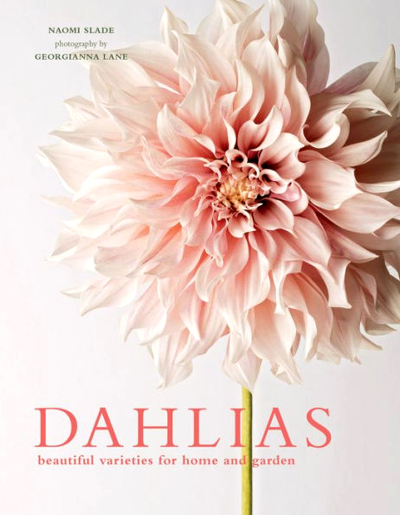
This is a gorgeous book, filled to overflowing with spectacular, full-page images of dahlias that are sure to get a gardener’s heart pounding. Although the text by noted UK garden writer Naomi Slade is perfectly fine, it’s the photography by Georgianna Lane that’s the star here.
I have to admit I’m a little uncomfortable with that. I read garden books to learn things, mostly, but this book is more about getting you excited about dahlias by showing you how incredibly beautiful they can be. And I’d say it works!
That’s ‘Café au Lait’ on the cover, and inside there’s an even more beautiful, two-page spread of a dozen blossoms in all their subtle, rippling, cream-to-pink glory. How anyone could look at that image and not want to grow ‘Café au Lait’ is beyond me.
Sixty-four other dahlias are featured – including heirlooms ‘Clair de Lune’, ‘David Howard’, ‘Fascination’, ‘Gerrie Hoek’, ‘Kelvin Floodlight’, ‘Thomas A. Edison’, and more – each with a breezy, one-page description and a luscious, full-page photo or more. There isn’t a lot of other information, just six pages of dahlia history and botany, six pages about the various forms, a dozen pages on how to grow them – from a UK perspective—and that’s it. But did I mention how beautiful the photos are?
“Dahlias are easy and enjoyable to grow,” Slade writes, and “there are few plants that flower so consistently and splendiferously.” If you already grow them, this book – which is a great value at just $15.50 online – will be a treat. And if you haven’t tried them yet, it may be just what you need to get started. (March 2019)
Great Companions to Plant with Your Iris this Spring
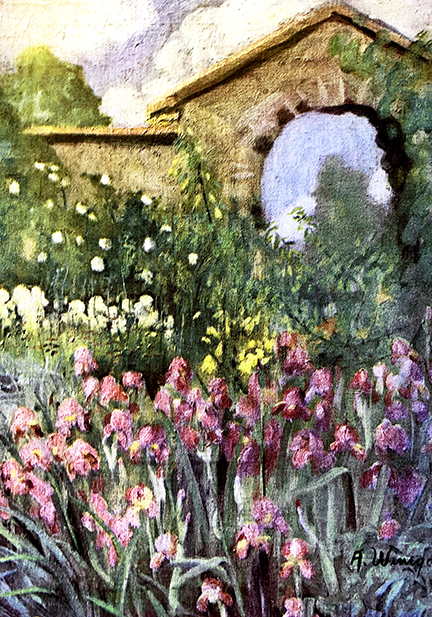
The right companion can make any plant in your garden look better. For bearded iris, here are some tips from two of America’s greatest garden writers.
For June borders that are “a joy indeed,” Louise Beebe Wilder in her 1927 book My Garden recommends intermingling iris (as in this painting from another of her books) with “tall blue and white lupines, lemon lilies [Hemerocallis flava], foxgloves, and peach-leaved campanulas, with a background of Persian lilacs and such free-growing roses as ‘Stanwell’s Perpetual’, ‘Madame Plantier’, and the yellow briers – ‘Harisoni’ and the Persian – and edged with double white pinks and Nepeta mussini [catmint].”
John Wister in his 1930 The Iris recommends some of the same plants and adds to the list: “Good garden combinations can be made with a background of Spirea ‘Van Houttei’, Philadelphus coronarius [mock orange], and kerria with lavender iris and salmon pink Oriental poppies. Pink iris [such as our ‘Queen of May’ and ‘Caprice’] go equally well with this. Gypsophila [baby’s-breath] statice, clove pinks, Nepeta mussini [catmint], Anchusa [Italian bugloss], and lupines are but a few of the many plants that gardeners have used successfully with various irises.”
With their smaller flowers and rugged constitutions, heirloom iris often combine more harmoniously in gardens than modern cultivars do. We’re shipping a dozen of the best for planting in April, and now is the time to order! (March 2019)
“Mind-Blowing” – The Hidden Life of Trees
“Have you read The Hidden Life of Trees ?” my friend and former micro-farms manager Lynden Kelly asked me. “It’s mind-blowing!”
So of course I had to give it a look – and I completely agree, it IS mind-blowing.
If its subtitle What They Feel, How They Communicate sounds a bit wacky to you, I have to admit that I felt the same way at first. But once I started reading the book, I couldn’t stop, and checking online I discovered that, although some scientists criticize the way author Peter Wohlleben expresses things, nobody says he’s a lunatic.
Wohlleben is a professional forester who manages a large forest for a small town in Germany. In the book’s first chapter, “Friendships,” he describes how he discovered that some moss-covered “rocks” in his forest that he’d walked by for years were actually the gnarled remains of an ancient tree stump, five feet in diameter. And here’s the mind-blowing part – despite having no leaves and therefore no way to feed itself, the tree was still alive, decades after it had been cut down, fed by its younger “friends” through the vast web of roots and fungi that connects trees underground.
As I read on I found myself saying “oh wow!” over and over again. In “The Language of Trees,” for example, he talks about how African acacias pump toxins into their leaves the moment giraffes start feeding on them. The giraffes move on to other trees, but scientists wondered why they always moved some distance away before they resumed feeding. It turns out the chewed-on trees release ethylene gas which, when it reaches nearby acacias, causes them to start pumping toxins into their leaves, too. Oh wow, right?
But is it actually “language,” you might ask. Wohlleben argues that even humans use scents to communicate – hence the multi-billion dollar fragrance industry – and that to understand the incredibly diverse world of living things we need to broaden our definitions of concepts such as “friendship” and “language.” After reading Hidden Life, I think he’s right.
Wohlleben also has an informal, almost chatty writing style which makes his book highly readable. If you’re a plant-lover, I think you’ll find it a mind-blowing treat. (January 2019)
“We Believe Most of the World’s Ills Can be Solved in a Garden”

How’s that for an ambitious statement? Or should I say an inspiring statement?
Our friends at the Pacific Horticulture Society recently adopted a new motto – “People Connecting with the Power of Gardens” – which encourages us to see gardening as more than pretty flowers and endless weeding. As they explain it, “We believe most of the world’s ills can be solved in a garden, if we nurture landscape literacy and cultivate relationships. It is the whole ecosystem that counts, and people are very much a part of that ecosystem.”
Indeed we are! Thanks, PHS, for reminding us all that what we learn in our gardens and the joy we find there can make the world a better place – if we share it over the garden fence with our neighbors near and far. (June 2018)
Another Great Winter Read: The Reason for Flowers
“I am reading an amazing book about flowers,” one of my favorite former employees texted me recently. “It would be great for the newsletter. It is so delightful! I love all of the info on the history of flowers in different civilizations (rituals, architecture, etc.) and learning about the various pollinators.”
As it turned out, I’d bought the book a couple of years ago but set it aside after just a few pages. Brienne’s enthusiasm spurred me to give it another try, though, and I discovered that she was right – The Reason for Flowers: Their History, Culture, Biology, and How They Change Our Lives is a fascinating book.
Here’s my advice, though: skip the first 80-page section about “Sexuality and Origins,” which I found slow going. (The author is an expert on pollination ecology and evolutionary biology so he has a LOT to say about these topics.) Start instead with one of the other sections:
“Growing, Breeding, and Selling,” in which I learned that there’s evidence Neanderthals buried their dead with flowers,
“Foods, Flavors, and Scents,” which includes an ancient Egyptian perfume recipe that starts with 2000 Madonna lily flowers,
“Flowers in the Service of Science and Medicine,” which introduced me to the theory of biophilia, and
“Flowers in Literature, Art, and Myth,” which includes Ezra Pound’s evocative, two-line poem “In a Station of the Metro”: “The apparition of these faces in the crowd: / Petals on a wet, black bough.”
Once you’ve enjoyed these faster-paced sections, all of which are rich with surprising information you won’t find in most garden books, I think you’ll want to go back and read the first section. I know I did. (Thanks, Brienne!) (Jan. 2018)
Peonies, Bugs, & Gardening with Laura Ingalls Wilder
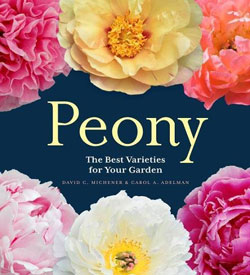
Peony: The Best Varieties for Your Garden – This book is so new that Amazon isn’t even shipping it until later this month, but I got a copy Monday and couldn’t wait to tell you about it.
It’s definitely “a stunner,” as co-author David Michener of the University of Michigan Peony Garden told me, with page after page of glorious photos, many by co-author Carol Adelman of Oregon’s Adelman Peony Gardens. After chapters on peony history and origins, peony types, gardening with peonies, and peonies as cut flowers, most of the book is devoted to mouth-watering close-ups and short descriptions of nearly 200 peonies.
Although I wish there were more heirlooms, David and Carol have put together a line-up that’s impressively diverse. Most are herbaceous peonies, but there are plenty of intersectional and tree peonies, too, all dating from 1824 to 2015, and the incredible range of colors and forms is sure to have you ooo-ing and ahhh-ing. The book’s price is impressive, too – just $19 at Amazon. So what are you waiting for?
The World of Laura Ingalls Wilder: The Frontier Landscapes that Inspired the Little House Books – Before she was a famous author, Marta McDowell was a customer of ours. (See our blog for a photo of her visiting OHG this past September.) I loved her first book, Emily Dickinson’s Gardens, published in 2004, and since then she’s written three other gems: Beatrix Potter’s Gardening Life, All the Presidents’ Gardens, and now this one.
You don’t have to be a fan of the Little House on the Prairie books or TV series to enjoy it. The illustrations – antique images, original artwork from the books, and historic and modern photos – drew me in immediately, and Marta’s writing reads more like a conversation with a friend than a dissertation. The Wilders homesteaded in a half dozen states, from New York to South Dakota, and their story is more about growing food than flowers, as well as the untamed natural world they lived in.
At the end are chapters on “Visiting Wilder Gardens” and “Growing a Wilder Garden” today, and then just before the index there’s my favorite photo: a snapshot from 1962 of Marta’s family standing in her great-aunt’s backyard – “the flower garden that I imprinted on” – next to a big beautiful swath of tiger lilies.
Garden Insects of North America, second edition – I got a copy of this book for my birthday recently, and it’s even better than I expected. First of all it’s BIG: 704 pages, weighing a hefty five pounds. It’s so well bound, though, that it opens flat for easy reading, and the cover seems so durable that I won’t hesitate to take it with me into the garden.
Then there are the photos: 3300 of them, all in full color, and helpfully organized into chapters such as “Insects That Chew on Leaves and Needles.” I admit my first reaction to them was “gross!” Most bugs, after all, aren’t as photogenic as the caterpillar on the cover, and it’s daunting to see page after page of damaged plants. But before long I was discovering insects I’d seen before but didn’t know what they were – such as the tiny, mosaic-patterned ailanthus webworm moth – and I realized this book is going to be both useful and fun.
Superstar garden blogger Margaret Roach recently called it “a must for every gardening household,” and I couldn’t agree more. One caution, though: be sure to get the brand-new second edition which is bigger and better than the 2004 original. (Dec. 2017)
Mozart’s Starling: Seeing Nature with New Eyes
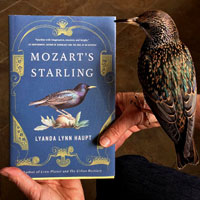
The past is full of surprises, and so is Nature.
Did you know, for example, that Mozart had a pet starling that he loved so much that he held an elaborate funeral for it when it died? Lyanda Lynn Haupt turns this historical tidbit into a fascinating book that’s part biography, part nature study, and part detective novel, as well as a heart-warming memoir of Haupt’s life with her own pet starling, Carmen.
Although starlings today are one of the most reviled birds in North America, outcompeting native birds and destroying some $800 million worth of crops, in Mozart’s time they were often sold as pets. One day as he was walking down the street, Mozart was surprised to hear a starling whistling a phrase from his brand-new piano concerto. Delighted, he brought the bird home where it soon became, in the words of one reviewer, “his companion, distraction, consolation, and muse.”
Starlings, it turns out, are bright, inquisitive, playful, highly sociable, and extraordinary mimics – much like Mozart himself. They are closely related to mynas, and their songs, which have always sounded like random squawking to me, are actually bits of mimicked sounds they weave together into complex, individual compositions.
Haupt’s pet Carmen mimicked everything from the beeping of the family microwave to phrases such as “Hello, honey.” She also turned “my household and my brain completely upside down,” Haupt writes, leading her on a pilgrimage far beyond anything she had envisioned. Their surprisingly intimate relationship gives the book its emotional heart and reminded me of books I once loved such as Rascal and The Yearling.
Mozart’s Starling is both entertaining and inspiring, and you’ll learn a lot from it about birds, Mozart, creativity, animal intelligence, and what we all have in common with wild creatures – including those you may have once scorned as nothing more than pests. (Sept. 2017)
New and Improved: The “Bible” for Restoring Historic Gardens
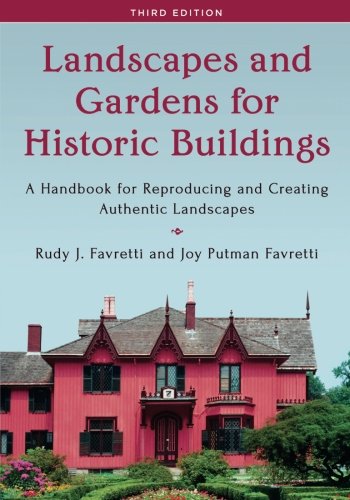
Like most people, I never thought about plants and gardens having a history – until almost 40 years ago when I bought my first old house and walked out into the tiny yard eager to make it my own.
There behind the overgrown privet hedge, I discovered a few barely surviving plants, including a white, single-flowered peony. Suddenly I realized it wasn’t just my yard. Someone else had loved it before me. But who, and when? Was the peony ten years old, or 50, or 100? And what about the hedge?
Looking for answers proved frustrating at first. This was back in the dark ages – before Google. But finally I discovered this book by Rudy and Joy Favretti – or rather the original, 1978 edition of it – and I was no longer wandering in the wilderness.
I’ve been using and recommending it ever since, and as I say on the back cover of this updated and expanded third edition, “Bravo! A new edition of this indispensable work has been long overdue. It’s the original guide to researching and restoring American home landscapes, by the dean of American landscape preservation. For decades, savvy home-owners and museum sites have turned to it for guidance – and now, with its many updates and additions, it’s better than ever.”
Although the core of it is unchanged, Rudy and Joy have added illustrations and updated information throughout. Best of all are the additional examples from their long careers, including a page on the archaeological excavation that revealed the long-vanished, mid-1600s garden at Bacon’s Castle in Virginia.
If there’s an old yard you care about, Landscapes and Gardens for Historic Buildings is the book for you. It may not change your life the way it did mine, but it will certainly help you see any yard – and the wider landscape all around us – with new eyes. (May 2017)
Heirloom Daffodils (and OHG) Featured in Garden Design
The spring 2017 issue of Garden Design arrived here last week with a host of excellent articles including profiles of Annie’s Annuals and Floret Flower Farm as well as “Small Gardens, Big Ideas” which explores gardens ranging in size from a fifth of an acre to a mere 400 square feet.
Best of all, though, is an eight-page article about daffodils which, I’m happy to say, gives heirlooms as much attention as modern varieties. (Thank you, Garden Design friends!)
“Deer hate them,” author Meg Ryan begins. “They’re low maintenance. They have a wildflowerish charm. And there are enough heirloom and newly developed varieties . . . that they offer gardeners endless opportunities for discovery. Says plant historian Scott Kunst, “They keep things richly complicated. . . .”
To see what else we talked about – as well as photos of dozens of daffodils including our heirlooms ‘Bantam’, ‘Beersheba’, ‘Butter and Eggs’, ‘Geranium’, ‘Mrs. Langtry’, ‘Rip van Winkle’, ‘Stainless’, ‘Sweetness’, ‘Thalia’, Trevithian’, and ‘Van Sion’ (aka ‘Telamonius Plenus’) – look for Garden Design at your local newsstand or bookstore, or subscribe online at gardendesign.com.
And if you see an heirloom there you especially like, you can order it now at oldhousegardens.com/daffodils. (Mar. 2017)
Save 66% on Thousands of Garden Books
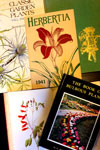
After 40 years of selling used and rare books, our friend Heiko Miles of Calendula Horticultural Books is closing up shop to devote more time to other pursuits. As he explained to me recently, “Life is just so full.”
That’s good news for garden book lovers because everything at CalendulaBooks.com is now marked down 66%. Although some of the rarest are still pricey – a 1625 Italian florilegium will set you back $1,048– most are less than $5, and many are just a dollar or two. For example, one of the boxful I just bought is A.E. Speer’s 1911 Annual and Biennial Garden Plants “with historical notes and very many variety descriptions” for just $1.03.
Heiko’s website is bare-bones, but it’s filled with treasures, and in all the years I’ve been ordering from him, he has always served me well. Thank you, Heiko, and may your next chapters all be happy ones! (Feb. 2017)
Colette’s Gardenia: “I Bow Down Before the Tuberose”
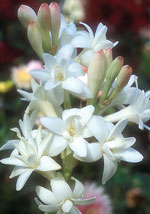
Although little known today, Colette (1873-1954) was the highly regarded French author of some 50 novels, many of them considered scandalously sensual at the time.
Her 1948 book For an Herbarium celebrates the sensual delights of flowers. In the chapter titled “The Gardenia’s Monologue,” that famously fragrant flower scorns nicotiana, jasmine, and other scented rivals before finally making this confession:
“I put up with all of these humbler bearers of nocturnal balms, certain that I have no rivals, save one, I confess . . . before whom at times I do worse than confess: I abdicate.
“On certain meridional nights heavy with the promise of rain, certain afternoons rumbling with casual thunder, then my ineffable rival need only show herself, and for all the gardenia in me, I weaken, I bow down before the tuberose.”
To savor the sublime fragrance that inspired Colette, order your single or double tuberoses now for April delivery. (And thanks to Toni Russo of Solon, Iowa, for sharing this essay with us!) (Jan. 2017)
Garden Books for Giving and Getting
Although the cold, short days of winter aren’t the best for gardening, they’re perfect for garden reading – and books make great holiday gifts. Here are five new ones I’m hoping to enjoy before spring returns.
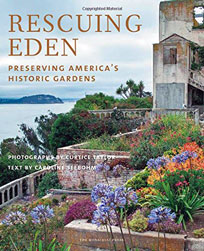
Rescuing Eden: Preserving America’s Historic Gardens, by Curtice Taylor and Caroline Seebohm: “Most gardens do not survive their creators, being sold off, dug out, or, if not utterly destroyed, then so drastically changed as to be sadly unrecognizable. The 28 remarkable properties in this book” – ranging from Middleton Place plantation to the gardens of Alcatraz – “are happy exceptions to that rule, rescued from near-obliteration because of historic connections. . . . Some are still in the process of renovation, and others will never be fully restored, but all offer rare glimpses into this country’s horticultural history.” (reviewed by Adam Levine in Country Gardens)
Garden Flora: The Natural and Cultural History of the Plants in Your Garden, by Noel Kingsbury: “This must be the most beautiful book of the publishing season, with an oversize format rich in botanical art and historic and contemporary photos. Every page is stunning, a revelation in art and text of flora’s long and curious history. Kingsbury’s writing is a lively backstory to what we grow in our gardens” – including most of the bulbs we offer – and “it’s also right up to the minute with insight on current plant breeding and a poignant look at the plants we’ve lost.” (reviewed by Val Easton in the Seattle Times)
The Botanical Treasury, by Christopher Mills: “The excitement of discovering a new plant is almost tangible in this lavish collection of plant histories. A delightful compendium of 40 plants from around the world, The Botanical Treasury tells the story of each one through a fascinating mix of botanical illustrations, letters sent to Kew from plant hunters, and reprinted extracts from botanical periodicals. . . . The book also includes forty reproduced prints of featured plants which can be framed – the icing on the cake of this tremendous and fascinating collection.” (reviewed in The English Garden)
A Garden for the President: A History of the White House Grounds, by Jonathan Pliska: “The White House grounds are the oldest continually maintained ornamental landscape in the United States. Handsomely illustrated with historical images and newly commissioned photography, A Garden for the President explores not only the relationship between the White House and its landscape but also the evolution of its design; the public and private uses . . . ; and the cultivation of the grounds with a focus on the specimen trees, vegetable and ornamental gardens, and conservatories. (reviewed by the White House Historical Association)
Bliss Irises: Family and Flowers, The Journey to a National Collection, by Anne Milner: “Anne Milner blends personal history with gardening in this beautifully illustrated book. Her story starts with the discovery that her grandfather’s cousin was . . . Arthur J. Bliss, who introduced ‘Dominion’, a ground-breaking purple iris that made him world famous. . . . The book’s second half focuses on the [more than 175 iris Bliss introduced], with detailed information about the plants, accompanied by photographs, watercolors, and line drawings.” (reviewed in Plant Heritage) (Dec. 2016)
Green Reading: Penelope Hobhouse’s Top 10
How about settling down in the shade with a tall glass of something frosty and losing yourself in a great garden book this summer?
After a lifetime of gardening, 86-year-old Penelope Hobhouse – who has written a dozen books and designed gardens for English royalty, the RHS, and Steve Jobs – listed her ten favorite garden books in the December 2015 issue of Gardens Illustrated.
Two of her favorites, I’m happy to say, are more than a century old, and six deal with garden history!
Garden Design, by Sylvia Crowe, 1958 – “My first choice,” Hobhouse says. This work starts with a long section on garden history and “remains the most comprehensive book on design I know.”
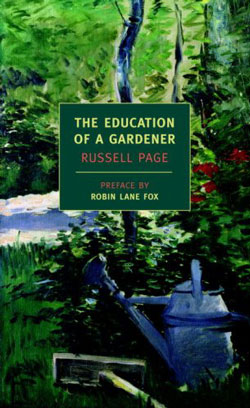
The Education of a Gardener, by Russell Page, 1962 – A modern classic, this small book by the celebrated garden designer “describes his visits to great gardens and discusses what they taught him.”
The Formal Garden in England, by Reginald Blomfield, 1892 – This historical survey by a man who was “violently opposed” to the then-new “natural-style” gardens “makes you think where you stand in the argument which still reverberates today.”
Penelope Hobhouse’s Gardening through the Ages, 1992 – Originally published in England as Plants in Garden History, this is “an illustrated history of plants and their influence on garden styles from ancient Egypt to the present day.”
Paradise as a Garden in Persia and Mughal India, by Elizabeth Moynihan, 1979 – “Highly readable” and a “masterpiece,” this is “the best introduction” to garden-making from Cyrus the Great in 540 BC to Shah Jehan in 1660 AD.
The Landscape of Man: Shaping the Environment from Prehistory to the Present Day, by G. and S. Jellicoe, 1979 – “Perhaps this is the only book you need,” Hobhouse writes, because it covers garden history and design “but with an emphasis on the garden as part of the environment.”
Italian Villas and Their Gardens, by Edith Wharton, 1903 – The only American book on her list, this 1903 work by the famous novelist “captures the essence of Renaissance taste.”
The Hillier Manual of Trees and Shrubs, by Hillier Nurseries – This is “for me the most valuable” reference book, Hobhouse writes, because “I cannot envisage a garden without a framework of woody plants.”
Perennials and Their Garden Habitats, R. Hansen and F. Stahl, translated in 1993 – “Astonishingly detailed” and “my new bible for planning my own garden,” this encyclopedic German work “puts more emphasis on the ecological needs of a plant.”
The Green Tapestry: Perennial Plants for the Garden, by Beth Chatto, 1999 – “No library can be complete without” one of Chatto’s books, Hobhouse concludes. “She has taught us to garden better using suitable plants in sustainable ways.”
Could one of these be your next favorite garden book? If you can’t find them at your local library, ask about borrowing them through inter-library loan which is simple and free. Or consider buying used copies at Amazon and elsewhere, where some are available for as little as $.01 plus $3.99 shipping – less than you’d probably pay for a six-pack of annuals. (June 2016)
There’s No Debate: All the Presidents’ Gardens is a Winner
Just in time for election season, Marta McDowell’s fascinating new book All the Presidents’ Gardens is now on bookstore shelves and online.
As Marta writes in the preface, “whether gardeners lean right or left, blue or red, we are united by a love of green growing things and the land in which they grow,” and that’s what this book is all about. From George Washington – who “like most serious gardeners was a bit plant-crazy” – to Michelle Obama and her iconic vegetable garden, All the Presidents’ Gardens tells the story of the White House landscape and the people who’ve shaped it for the past 200 years. Even better, Marta sets this special place’s history into the much larger story of American gardening and shows us how new plants and technology along with deep-seated cultural changes and the whims of fashion have all played a role in its constant evolution.
I remember Marta telling me way back in 2002 when she first ordered bulbs from us that she was working on a book about Emily Dickinson – and did I know that Dickinson loved hyacinths, she asked. Since then she’s published Emily Dickinson’s Gardens as well as Beatrix Potter’s Gardening Life, but as much as I like those earlier books, I think All the Presidents’ Gardens is Marta’s best yet. There’s a rich depth and breadth to it and yet it reads almost like a novel, brightened by Marta’s personal voice and engaging sense of humor.
See what I’m talking about – and enjoy some of the book’s 215 color and black-and-white images – where the first 73 pages are available for your browsing pleasure. Then, if you’re like me, I bet you’ll want to get your own copy of this All-American winner. (April 2016)
Book of the Month: The Artist’s Garden: American Impressionism and the Garden Movement
Gardening is a creative act, and plants can be amazingly beautiful, so is it any surprise that artists are often gardeners — or should I say that gardeners are often artists?
In The Artist’s Garden, the intertwining histories of American art and American gardening from about 1880-1920 are explored in seven essays by noted experts. Written to accompany a traveling exhibit organized by art historian and avid gardener Anna O. Marley of the Pennsylvania Academy of Fine Arts, the book focuses on artists from the Northeast and the Philadelphia area which has had a rich gardening tradition for centuries.
More than 100 of the book’s 250 pages feature full-page color illustrations of paintings and other works by artists ranging from well-known figures such as Childe Hassam and Mary Cassat to lesser lights whose work is often equally impressive. Although the quality of the reproductions isn’t as sparkling as might be hoped — Impressionism, after all, emphasized sunlight and vibrant colors — paging through them is a great pleasure and offers fascinating glimpses of the gardens of the era.
As might be expected, the essays vary in interest and readability, but they’re all worthy contributions. I especially liked Katie Pfohl’s “The Garden Painted, Planted, and Printed” which explores the rise of chromolithography in nursery catalogs and commercial art and its impact on fine art and the public’s acceptance of the brighter palette of Impressionism.
If you’re lucky enough to live near Winston-Salem or Pasadena, you can enjoy the exhibit itself at the Reynolda House Museum of American Art through January 3 or the Huntington Library near Pasadena from January 23 through May 9. If not, add the book to your holiday wish list and you can enjoy it in the comfort of your own home all winter long. (Dec. 2015)
Book of the Month: The General in the Garden
Mount Vernon’s head gardener Tatiana Lisle visited us last month, and along with gifts of home-made soap (including “Honey and Yogurt” with honey from her backyard hives, and “Hempalicious” with . . . well, we were afraid to ask), Tatiana also brought us a couple of wonderful new books.
If you’re a foodie I’m sure you’ll enjoy the fascinating Dining with the Washingtons — with recipes for everything from and fairy butter and salamongundy to cherry bounce — and if you’re a gardener I highly recommend The General in the Garden.
Although beautiful enough to be a coffee-table book, The General in the Garden is also rich in information. At its heart are three chapters exploring Mount Vernon’s landscape history. The first tells of Washington’s dramatic redesign of his estate after the Revolutionary War. The second details the ever-changing restoration of the landscape from 1860 to 2005. And the third details the meticulous research and archaeology that led to the recent recreation of the Upper Garden — which for most of the 20th century was a formal rose garden — into three enormous, utilitarian vegetable beds bordered by relatively narrow flower beds. The book concludes with a historical guide to everything from “Greenhouse and Slave Quarter” to “The Lost Deer Park” along with lists of plants grown at Mount Vernon during Washington’s time.
As one of the most important American landscapes to survive from the 18th century, Mount Vernon has long deserved a book of this caliber. Whether you simply page though it enjoying the illustrations or read every word including the footnotes, The General in the Garden will give you a deeper appreciation for this extraordinary landscape, for the difficult art of landscape preservation, and for Washington himself, a man who was not only the father of his country but a gifted landscape designer and an unabashed tree-lover. (June 2015)
Brand New Daffodils in American Gardens: 1733-1940
This is a landmark book, not only because of its content but simply because it’s been published. Twenty years ago I don’t think anyone would have even considered publishing an entire book devoted to the history of daffodils in America. And yet here it is, and that in itself is a testament to the progress that’s been made in convincing people that old plants can be just as garden-worthy as new ones, and that preserving them is as important as preserving historic buildings and other relics of our cultural history.
Our friend Sara Van Beck, the book’s author, has been an advocate for historic daffodils for many years. Her late father John Van Beck, was the founder of the Florida Daffodil Society and joined with me in the late 1980s to persuade the American Daffodil Society to establish a special section for Historic Daffodils in every ADS show across the country. In Daffodils in American Gardens, Sara shares the wealth of information — and images — that she’s collected over the years not only from old books and nursery catalogs but from letters, diaries, periodicals, and from exploring the daffodils that survive at historic places and abandoned sites throughout the Southeast. And what a wealth it is!
Although this may not be the easiest book to read (think dissertation rather than pop fiction) and Sara and I may sometimes disagree in our interpretation of the historical record, Daffodils in American Gardens is a major work of garden-history scholarship, and I’m thrilled that it’s been published. Congratulations, Sara, and thank you! (March 2015)
Book of the Month: The Garden Diary of an Irish Lady, 1891-1922
When she married the Earl of Mayo in 1885 and moved to the family estate outside of Dublin, Geraldine Ponsonboy knew little about gardening. Before long, though, she had thrown herself into it whole-heartedly, hiring and firing several head gardeners until she found one who could accept her decidedly hands-on approach, and eventually filling a garden diary with 31 years’ worth of notes, drawings, and watercolors.
Geraldine’s fascinating and beautiful diary has recently been published as Lady Mayo’s Garden. Sub-titled The Diary of a Lost 19th Century Irish Landscape, it gives readers an insider’s look at gardening during an era when Victorian pattern-bedding was giving way to Arts and Crafts esthetics and “old-fashioned” perennial borders. Happily for bulb-lovers like us, it focuses mainly on the spring garden, and as our good friend Betsy Ginsburg points out in a recent blog post, “with the renewed interest in heritage gardening and heirloom varieties, many of Lady Mayo’s favorite spring plants are obtainable today. The lovely Narcissus poeticus recurvus and ‘Conspicuous’ daffodils currently sleeping in my garden are the same varieties that graced” Geraldine’s garden a century ago.
In 1922 the Mayos’ estate was attacked by partisans during the Irish Civil War. Given just 20 minutes to get out before her house was burned, Geraldine set her chickens free and saved her diary. Learn more about this remarkable woman and her garden in Betsy’s engaging review of Lady Mayo’s Garden at GardenersApprentice.com. (Feb. 2015)
Flora Illustrata: Sumptuous New Book for Holiday Giving (and Getting)
A dazzling image of a parrot tulip from the 1700s is sprawled across the cover of Flora Illustrata, and it’s hard to imagine any gardener resisting its allure. Open the book and you’ll find nearly 300 other fascinating images, most in color and some covering two full pages.
But this isn’t a picture book. Subtitled Great Works from the LuEsther T. Mertz Library of the New York Botanical Garden, it’s a collection of essays that explore the riches of the Library — which holds over a million books and eleven million other documents — and its development since 1899. In many ways it’s like taking a walk through the Library with a group of incredibly expert guides who keep pulling rare volumes off the shelves to give you a glimpse inside of them while they explain their importance and how the Library acquired them. Since the works are all discussed within the context of their times, the end result is a bibliographic history of botany and gardening.
The three essays in Part IV, “Celebrated Works on American Gardening and Horticulture,” bring this history right into our own backyards. I especially liked the one on 19th-century nursery and seed catalogs (what a surprise, eh?) which is richly illustrated with images drawn from the more than 58,000 items in the Library’s collection.
Although any gardener will enjoy the book’s illustrations, I’ll caution you that the scholarly prose often makes for slow going, and this is a book about books and botany as much as it is about gardening. That said, I believe readers with anything more than a passing interest in the history of plants and gardens would love to get Flora Illustrata for their own library this holiday season. (Dec. 2014)
New and Free: The Georgia Daffodil Society’s Historics Handbook
Our good customer Sara Van Beck of Atlanta has been a tireless explorer and advocate of heirloom daffodils for many years. Although her much-anticipated new book Daffodils in American Gardens: 1733—1940 won’t be released until February, you can get a preview of some of what it’s sure to include in her recent online publication Historics Handbook: A Short Field Guide to the Most Common Old Daffodils in the Deep and Coastal Southeast. The 66-page booklet can be downloaded for free from the website of the Georgia Daffodil Society. There’s no direct link to it, but just go to georgiadaffodilsociety.com , click on the Historics Handbook link at the very top of the page, and then click on the link under the GDS address.
No matter where you live, if you’re a fan of historic daffodils you’ll find this handbook a valuable resource. Most of the daffodils in it are hardy well into zone 5, and it starts off with universally helpful sections on Characteristics of Historic Daffodils, Saving and Moving Daffodils, Rules for Rescuing, and Taking Photos for Identification. More than 50 historic varieties are pictured and described, along with many unknowns, and Sara’s descriptions are often rich in details that will help differentiate a variety from other similar daffodils. Some photos may be confusing to gardeners further north because the colors of many varieties bleach to paler yellow or even pure white in the stronger sunlight of the South, but other than that they’re generally excellent.
Although the handbook is free to view or download, the Georgia Daffodil Society is welcoming donations in support of it, and we hope you’ll be inspired to send them a check.
And remember, all of our daffodils for the South are now on sale! (Nov. 2014)
Amy Stewart’s “Letter to the Next Gardener”
From the Ground Up: The Story of a First Garden isn’t a new book, it’s just a good one. Published in 2001, it was the first by Amy Stewart who went on to write best-sellers such as Flower Confidential and The Drunken Botanist and co-found the popular Garden Rant blog. It’s a funny, honest, and engaging book that will resonate with anyone who’s struggled to learn the mysterious ways of plants and transform their yard into one of those flower-filled paradises that we all envy in the garden magazines. In the final chapter, Stewart and her husband are preparing to move and she says goodbye with a bittersweet “Letter to the Next Gardener” which reminds us that every garden has a history and we’re just one small part of it:
“Maybe it’s a little crazy for me to write a letter like this. After all, we don’t really own the land, do we? We just occupy it. Gardening taught me this. I moved onto this piece of land and knew immediately that someone had been there before me. The daffodil bulbs scattered along the fence, the ancient florabunda, the citrus trees, all pointed to a long-ago gardener with ambitious plans. But these plants didn’t tell the whole story. They were newcomers, too. Once, digging in the garden, I found a piece of stone, chipped into a crude blade. Someone was here long before me, crouched on a bare bluff overlooking the river, before the settlers arrived and colonized the rim of land around the bay. This piece of earth was never mine, and not just because I rented rather than owned it. Land is the one thing that can’t be moved, that I can’t bring with me. It will remain here for the next generation, and the generation after that, and it will tolerate our pounding on it and digging into it the best it can.
“I hope that I have left the garden in better condition than when I arrived. It may be weedy and unkempt when you find it, but just wait. I’m sure the cosmos will self-sow, and the yarrow will hold its own against the oxalis, and somewhere, in the wilderness, in the gentle tangle, the butterflies and the bees will return, as they have for years.
“Wishing you luck and patience and plenty of sun — Amy Stewart.” (Nov. 2014)
Save 60-80% on These 7 Classics (and Hundreds More)
Although you may be too busy gardening to read much these days, now is a great time to buy garden books from discount bookseller Edward R. Hamilton. His latest print catalog includes 18 pages of garden books, including these seven that we highly recommend:
Restoring American Gardens: An Encyclopedia of Heirloom Ornamental Plants, 1640-1940, essential masterwork by Denise Adams, $10 (originally $40),
Bulb, 544 luscious pages by expert Anna Pavord, $10 (originally $40),
Old-Fashioned Flowers: Classic Blossoms to Grow in Your Garden, with a chapter about our bulbs, by Tovah Martin, $4 (originally $10),
Spring-Blooming Bulbs, by the Brooklyn Botanic Garden, with a chapter I wrote on heirloom bulbs, $4 (originally $10),
Bulbs for Indoors: Year-Round Windowsill Splendor, by the Brooklyn Botanic Garden, $3 (originally $8),
Flowers and Herbs of Early America, by Colonial Williamsburg’s Larry Griffith, $10 (originally $50),
Writing the Garden: A Literary Conversation across Two Centuries, by Elizabeth Barlow Rogers, $7 (originally $28). (April 2014)
Two Great New Books for Holiday Giving (and Getting)
Our friend Denise Adams has given garden lovers the perfect companion for her landmark Restoring American Gardens: An Encyclopedia of Heirloom Ornamental Plants. Although the focus of her earlier book was plants (thank you very much), in her new book, American Home Landscapes: A Design Guide to Creating Period Styles, Denise and her co-author Laura Burchfield present a lavishly illustrated history of how the design and constructed features of our yards — fencing, paving, furniture, etc. — have changed over the past 400 years. They link past with present, too, offering advice to modern gardeners in their first chapter, “So You Want to Design a Historic Landscape,” and including case studies throughout the book. Maybe best of all, though, are the many illustrations and plans drawn from a wealth of historic sources. It’s one thing to read about what gardens were like in the past, but actually seeing some of them — and the gardeners who made and loved them — is endlessly fascinating.
Another new book that’s so beautifully illustrated you can enjoy and learn from it even if you only look at the pictures is Beatrix Potter’s Gardening Life: The Plants and Places That Inspired the Classic Children’s Tales. You’ll want to read it, though, because the story of Potter’s life and gardening as told by our friend Marta McDowell — author of the superb Emily Dickinson’s Gardens — is richly rewarding. Born in 1866, Potter was a shy girl with a love of nature who grew up to chart her own path, self-publishing her first book, The Tale of Peter Rabbit, becoming a celebrated author and preservationist, marrying at 47, and gardening with enthusiasm. In the second half of her book, Marta reconstructs a year in Potter’s gardens based on her letters, books, sketches, and watercolors. I was especially happy to learn that she loved heirloom plants and grew many of “our” bulbs: winter aconite, snowdrops (“the flower Beatrix most often mentions in her letters”), ‘Cloth of Gold’ crocus’, crown imperial, daffodils (including Lent lily and ‘Butter and Eggs’), hyacinths, tulips, the native English bluebells, bearded iris, peonies, lilies, and dahlias. Although the hero of her best-loved book is a rabbit — and the bad guy was the gardener — clearly Potter was one of us. (Read a New York Times interview of Marta with a photo of her holding one of our ‘Deuil du Roi Albert’ dahlias.) (Dec. 2013)
Happy Birthday, Garden Club of America!
No doubt gardeners have always gathered together informally to talk, learn from one another, and share the joys and pains of gardening, but the early 20th century saw the rise of garden clubs as we know them today. Eventually local clubs banded together to promote gardening, conservation, and civic improvement, and this year marks the 100th anniversary of the founding of the Garden Club of America. In celebration, the Club commissioned historian William Seale to document their long history of activism and good works in The Garden Club of America: One Hundred Years of a Growing Legacy. In it you’ll learn of the Club’s important role in preserving the redwood forests of California, for example, and their work to record and preserve the history of American gardens through the publication of the monumental Gardens of Colony and State in the 1930s and the commissioning of hundreds of magic lantern slides of American gardens which are now archived at the Smithsonian Institution. So, to all 18,000 current GCA members in 200 clubs across the country, congratulations and thank you! (April 2013)
Felder’s Tips for Slowing Down, Even in This Busy Season
Do the squirrels enjoy your garden furniture more than you do? Do you sometimes get so busy weeding, staking, and pruning that you forget to stop and smell the tuberoses? If so, you might want to try a little slow gardening. In his 2011 book Slow Gardening: A No Stress Philosophy for All Senses and All Seasons, Felder Rushing takes the principles of the Slow Food movement — which celebrates everything fast food is not — and applies them to gardening. It’s a quirky book from a quirky, iconoclastic guy, but I think Felder is on to something.
“Slow gardening isn’t lazy or passive gardening,” he writes. “It actually involves doing more stuff, but carefully selected to be productive without senseless, repetitive chores. By focusing on seasonal rhythms and local conditions, it helps the gardener get more from the garden. . . . Think ‘long haul’ and take your time. Life has lots of pressures — why include them in the garden?”
Felder offers a long list of suggestions for slowing down. None are earth-shaking, but that’s kind of the point. Here are a few to get you started:
“Spread out your chores; do a little as you go, instead of loading up the weekend.
“Right plant, right place — choose pest-resistant plants well-adapted to your local climate and soils, plant them well, and let them grow without being pushed. . . .
“When practical, use quiet hand tools over noisy power equipment. . . .
“Get personal with your weather — use a rain gauge and outdoor thermometer.
“Take it easy on vacation — visit public botanic gardens, and walk around older neighborhoods to savor what is grown locally by hands-on gardeners.
“Shop at a farmer’s market for in-season, locally-grown produce.
“Grow your own — propagate enough plants for you and for friends or neighbors.
“Ponder the mysteries of the universe, in the microcosm of your own back yard.
“Share relaxing garden techniques and easy, rewarding plants with children.” (April 2013)
Clair de Lune, Dahlia and Werewolf
Clair de Lune isn’t just an elegantly simple dahlia, a shimmering piece of music by Debussy, and the way the French say “moonlight,” it’s also the title of a young adult novel about a girl with a problem that’s, like, worse than pimples. As Publishers Weekly explains, Claire de Lune‘s heroine “is finally starting to feel like a normal teenager. It’s her 16th birthday, popular kids have shown up at her pool party, and wicked cute Matthew seems to like her. Then Claire discovers the family secret — she and her mother are werewolves.” What’s worse, “a rogue werewolf is killing people in town and Matthew’s father . . . is leading the charge to capture and ‘cure’ lycanthropes. Claire’s feelings for Matthew are too strong for her to obey her mother’s order to stop seeing him, and . . . with Claire’s local pack on the hunt for the rogue . . . things accelerate quickly.”
When we learned that author Christine Johnson lives in “an old house in an old neighborhood” in Indianapolis, we couldn’t resist putting together a trio of “Werewolf Dahlias” for her: ‘Clair de Lune’ (of course), ‘Prince Noir’ (the Black Prince), and shaggy, moon-touched ‘Tsuki Yori No Shisha’. We hope they make her howl with pleasure! (Dec. 2012)
Made in Michigan: Transcendent Crime Fiction by Elmore Leonard
Although the economy here in Michigan isn’t exactly booming, it’s gotten a lot better since we started this occasional series highlighting some of our favorite Michigan-made products. Unemployment, for example, has dropped from a national high of 14.2% to a much less painful 9.3%. So we’ll keep writing!
And speaking of writing, in a couple of weeks the National Book Foundation will honor Detroit’s Elmore Leonard with its lifetime achievement award, placing him in the elite company of writers such as Arthur Miller, Eudora Welty, John Updike, Norman Mailer, Toni Morrison, and Ray Bradbury. (Learn more here.) The 87-year-old Leonard recently published his 45th novel, and I’ve read and enjoyed most of them. He got his start in the 1950s writing Western short stories for pulp magazines, and in 1961 his novel Hombre was chosen as one of the best westerns ever by the Western Writers of America. Before long Leonard moved on to crime fiction where his main characters — such as Raylan Givens in the award-winning FX series Justified — are often a lot like his cowboy heroes: gritty individualists with a strong code of ethics in a world where the lines between good, bad, and evil are blurred. His breakout bestseller Glitz in 1985 led to a Newsweek cover story and a growing appreciation for his writing as more than just good crime fiction. Several of Leonard’s books have been made into movies, including Get Shorty and his favorite, Quentin Tarantino’s Jackie Brown which is based on his Rum Punch.
Leonard writes in a spare style that recalls Hemingway (but with a sense of humor, he likes to point out), and he has a gifted ear for dialogue. In his brief Elmore Leonard’s Ten Rules of Writing he advises would-be authors to “try to leave out the part that readers tend to skip” and says his most important rule is “If it sounds like writing, I rewrite it.” My favorite Leonard novel may be Killshot where the federal agents are more of a problem than a help, the bad guys range from bad to horrifying (with the worst ending up disconcertingly sympathetic), and the heroes are an ordinary married couple who have to save themselves. You can pick up a paperback copy of it and many of Leonard’s other novels for less than a dollar at Amazon — and I highly recommend that you do. (Nov. 2012)
Vegetable Gardening the Colonial Williamsburg Way
I don’t even grow vegetables anymore, buying them instead from our friends at the Ann Arbor Farmers Market and devoting the ever-shrinking sunny space in our old yard to flowers. But that didn’t stop me from snapping up this recent book by Wesley Greene. Wesley knows more about historic plants and gardening than just about anyone I know, and if you’ve ever chatted with him at Williamsburg’s Colonial Garden and Plant Nursery — maybe while your kids helped him lug a wooden bucket of water to sprinkle on the collards — you’ll know he’s a very personable guy and a natural-born teacher.
Written for backyard gardeners, Vegetable Gardening the Colonial Williamsburg Way offers an entertaining mix of history and how-to that’s as carefully organized as a well-tended vegetable garden. Eight long sections with titles such as “Root Crops” are sub-divided into chapters for individual vegetables such as sweet potatoes, parsnips, and obscure relics such as salsify and skirrets. Each chapter includes a short history of that vegetable from the dawn of time through the colonial era; a list of heirloom varieties you can grow today; “The Williamsburg Gardener’s Assistant” with Wesley’s advice for planting, tending, harvesting, and saving seed (all using, as the book’s subtitle says, 18th-Century Methods for Today’s Organic Gardeners); and a handy recap section of “Essentials.”
If you find yourself, as I did, wishing you lived next door to Wesley and his garden, you can do the next best thing and check out his weekly garden blog and visit and learn more about Williamsbur’g gardens online. We’re proud to be Williamsburg’s sole bulb supplier, so any bulbs you see blooming there are ours, from the lavish display at the Governor’s Palace to the ‘Zomerschoon’ tulips, tuberoses, and other colonial-era favorites in Wesley’s garden. Although his book on vegetable gardening is great, I’m hoping Wesley is already hard at work on a blockbuster sequel: Flower Gardening the Colonial Williamsburg Way. Please, Wesley, please! (Oct. 2012)
Reading Catalogs, Planting Bulbs, and “Plotting the Resurrection”
Millions of readers are familiar with the books of E.B. White, the author of Charlotte’s Web, Stuart Little, and other well-loved children’s classics. Although his wife’s writings are relatively unknown, gardeners will find Katharine S. White’s Onward and Upward in the Garden as entertaining as her husband’s work.
After 30 years as the head fiction editor at The New Yorker. Katharine in 1958 wrote an affectionate critique of the literary stylings of her favorite nursery catalogs. Readers responded enthusiastically, and she went on to publish the thirteen additional essays collected in this book, with titles such “Floricordially Yours” and “War in the Border, Peace in the Shrubbery.”
White was a big fan of bulbs (another reason I like her so much), and her husband ends the book’s introduction with this description of her planting bulbs “in the dying October,” filled with the transcendent optimism that all true gardeners know:
“The only moment in the year when she actually got herself up for gardening [rather than “grubbing about in a spotless cotton dress”] was on the day in fall that she had selected, in advance, for the laying out of the spring bulb garden — a crucial operation, carefully charted and full of witchcraft. The morning often turned out to be raw and overcast, with a searching wind off the water. . . . The bad weather did not deter Katharine: the hour had struck, the strategy of spring must be worked out according to plan. . . .
“Armed with a diagram and a clipboard, Katharine would get into a shabby old Brooks raincoat much too long for her, put on a little round wool hat, pull on a pair of overshoes, and proceed to the director’s chair . . . that had been placed for her at the edge of the plot. There she would sit, hour after hour, in the wind and the weather, while Henry Allen [her garden helper] produced dozens of brown paper packages of new bulbs and a basketful of old ones, ready for the intricate interment. As the years went by and age overtook her, there was something comical yet touching in her bedraggled appearance on this awesome occasion — the small, hunched-over figure, her studied absorption in the implausible notion that there would be yet another spring, oblivious to the ending of her own days, which she knew perfectly well was near at hand, sitting there with her detailed chart under those dark skies in the dying October, calmly plotting the resurrection.” (Sept. 2012)
Link of the Month: A World-Class Garden Library and PlantInfo.umn.edu
Although relatively unknown, the Andersen Horticultural Library of the University of Minnesota is one of the country’s richest resources for gardeners. Its collection of seed and nursery catalogs is especially impressive, with nearly 60,000 catalogs dating from 2012 all the way back to 1828. (If you’ve ever tried to buy an antique catalog on eBay, there’s a good chance you’ve been outbid by the library — as we well know!) The Andersen also holds 20,000 books (including rare herbals and works by Linnaeus, Redoute, and Repton) and 300 periodicals (including two centuries of Curtis’s Botanical Magazine), all housed in a beautiful building with furnishings by George Nakashima and windows overlooking the grounds of the Minnesota Landscape Arboretum.
Even gardeners who can’t visit the library can use its award-winning Plant Information Online to search for articles, links, and North American sources for close to 100,000 garden plants. A search for Narcissus, for example, returns a list of 1092 daffodils with at least one source for each. (We’re proud to be the only source for 19 of these daffodils, plus six new to our catalog this fall and our Web-Only Rarests). For gardeners searching for hard-to-find plants, plantinfo.umn.edu is an invaluable aid. (Sept. 2012)
20th Anniversary Wishes from the Dean of American Garden History
I got hooked on garden history in 1979 when I bought my first old house and discovered tiger lilies and a single white peony struggling to survive in its tiny, overgrown yard. I knew the house dated to the mid-1800s, but how old were those plants? This was before Google and Amazon, and I didn’t know where to turn for answers, but happily I stumbled upon a book that soon became my bible: Landscapes and Gardens for Historic Buildings by Rudy and Joy Favretti.
Rudy established the nation’s first landscape architecture program devoted to historic landscapes, at the University of Connecticut, and helped recreate scores of historic landscapes including those of Monticello, Mount Vernon, Bartram’s Garden, and Old Sturbridge Village. I sent him a copy of my first catalog in 1993, and he’s ordered bulbs and sent me encouraging notes ever since. Recently he wrote:
Your latest catalog is beautiful! I spent hours going over it. And congratulations for your 20th anniversary. . . . In your last note you said, ‘You’ve always been an inspiration to me, from the beginning.’ Yes, we’ve had a good and long relationship. But you know that inspiration thing works both ways. Teachers are spurred on by inspired ‘students,’ and you certainly were inspired and courageous to leave teaching school to start a little business whose success you were not sure of then. And now look! . . . Bravo! Here’s hoping for many, many more good and profitable years — at least another 20 — I’ll be 100 then!” (Sept. 2012)
Two Great Resources for Heirloom Iris Lovers
Classic Irises and the Men and Women Who Created Them — This exhaustively researched history by Clarence Mahan tells the fascinating stories of the people who developed the great irises of the 19th and early 20th centuries. It’s not light reading, but it is superb.
Historic Iris Preservation Society — Founded in 1988, this dedicated group offers help in identifying and finding heirloom iris, an annual rhizome sale, a journal, reprinted works, and a terrific website and e-zine at HistoricIris.org. The site is free and the rest is a mere $10/year. (2011-12 catalog)
Restoring the Garden of a Harlem Renaissance Poet
One of the most interesting historic gardens I’ve ever visited is that of Anne Spencer, a little-known African-American poet who lived in Lynchburg, Virginia. Starting in 1905, Anne and her husband Edward transformed their narrow backyard into a highly personal garden with an aqua-blue pergola, a small pool filled by a cast-iron African head spouting water (a gift from W.E.B. DuBois), and beds overflowing with roses, iris, larkspur, poppies, and other flowers. After Anne’s death in 1975, the garden that she’d called “half my world” was all but lost — but, remarkably, it wasn’t, and the story of its unlikely rescue is told in a fascinating new book, Lessons Learned from a Poet’s Garden by Jane Baber White.
“Lessons Learned” are the key words in that title, because as Jane told me in a recent email, the book isn’t just “the 28-year story of a garden restoration by a group of garden club ladies. The names could be changed and it could be anywhere. Indeed, that is sort of the point. I hope the book will be helpful to anyone, anywhere, who might be planning a garden restoration. These are the steps we took that might be helpful to them.” It’s not a dry how-to manual, though. It’s a richly illustrated book laid out something like a scrapbook with all sorts of bits and pieces clipped together and overlapping one another — old family photos taken in the garden, notes Anne scribbled on seed catalogs, receipts, newspaper clippings, snapshots of the restoration, and evocative photos of the restored garden today. Although I could argue with some of the things Jane and the garden club ladies did — I don’t think any restoration, for example, should start with a bulldozer — the bottom-line is that this compelling garden was in dire need and they saved it. For that, all I can say is bravo, and thanks!
To buy a copy of Lessons Learned, visit the newly-upgraded website of the Anne Spencer House and Garden Museum which is full of excellent photos and information. And since proceeds from the book will help fund the ongoing care of the garden, and the “lessons” it offers are so valuable, please consider asking your local library, garden club, or historical society to buy a copy, too. (Jan. 2012)
Founding Gardeners
Our first four presidents weren’t just fiery revolutionaries, authors of the Constitution, and saviors of the new nation, they were also avid gardeners. In Founding Gardeners, British author Andrea Wulf explores the intertwining political and agricultural/horticultural lives of George Washington, Thomas Jefferson, John Adams, and James Madison. All four were farmers who believed that citizens who worked their own land were the foundation of democracy. All four had a deep love of the American wilderness, and they found comfort and inspiration in cultivating their own home grounds.
Even readers who are familiar with the garden-lives of Jefferson and Washington will find a lot of new information in Wulf’s book. When the Constitutional Convention was on the verge of breaking down, for example, James Madison and several other delegates took a break to visit Bartram’s Garden, the nursery of the famous colonial botanists. There they saw native plants from all of the colonies growing happily together, with trees from big Southern states like Virginia sheltering woodland shrubs from small Northern states like Connecticut. Returning to the Convention with a fresh perspective and renewed commitment, they brokered a compromise that established the Senate and House as we know them today, with representation that protects both large states and small.
Although Founding Gardeners disappointed me in some ways — the narrative bogs down at times in too much political detail, Wulf makes several misstatements about plants (tuberoses are from Mexico, not Europe), and almost 40% the book’s 350 pages are end-notes — I finished it with a better understanding of a fascinating era in American history and of four great men who, like me (and you?) loved to putter around in their yards. (Dec. 2011)
One Writer’s Garden
Here’s a book to put at the top of your gift list — for you and anyone who loves gardening, history, American literature, independent women, or the South. Eudora Welty is one of the most revered American writers of the 20th century, and her home in Jackson, Mississippi is now a historical museum visited by pilgrims from all over the world. But when Welty first gave the property to the state in the 1980s, the garden which she had helped her mother plant and tend since the 1920s, and which offered her comfort and literary inspiration for decades, had all but disappeared from neglect.
This book is the story of the rediscovery and restoration of that garden, guided by author Susan Haltom and based mostly on family photographs, old letters, and Welty’s memory. What makes the book truly outstanding, though, is the way Haltom and co-author Jane Roy Brown integrate the story of the Welty garden into the broader social history of gardening and America — street-car suburbs, garden clubs, civic beautification, Progressivism, the conservation movement, and so on — and illuminate the many connections between Welty’s gardening and her writing. It’s also an especially attractive book, with big, full-color shots of the restored garden interspersed with a wide array of old photographs and historic images from books, magazines, and seed catalogs. We’re proud that many of our historic bulbs grow today in the Welty garden (Susan even thanks us in her acknowledgements), but even if they didn’t I’d be telling you this is a book you don’t want to miss! (Nov. 2011)
A Poet Reflects on a Century in the Garden
The Wild Braid isn’t exactly a compelling title (except maybe for hippie hairdressers?), but its subtitle definitely caught my interest: A Poet Reflects on a Century in the Garden. Published a year before he died in 2006 at the age of 100, this slim volume interweaves a dozen poems by Poet Laureate Stanley Kunitz with excerpts from his conversations with co-author Genine Lentine. For Kunitz, gardening and poetry had a lot in common. Both deal with immense, wild forces — nature and emotion, to oversimplify things — that human beings have a deep-seated need to explore and shape. That may sound a little grand, and Kunitz is definitely a deep thinker, but he’s also a down-to-earth guy who found enormous joy puttering around in his yard. The garden was never just a metaphor for him, although in his simple, accessible poems, compost piles and garter snakes take on much deeper meanings. If your gardening includes more than deck furniture and the latest supertunia, you’ll find in The Wild Braid a kindred spirit, an enjoyable read, and plenty to reflect on. (Sept. 2011)
Buried Treasures: Tasty Tubers of the World
Have you ever thought about adding a row of dahlias, elephant ears, or Jack-in-the-pulpit to your vegetable garden? After reading this slim volume from the Brooklyn Botanic Garden, you might! Edited by Beth Hanson, Buried Treasures is an entertaining introduction to dozens of plants whose underground storage organs make for tasty eating. Several of them are North American natives such as Jerusalem artichoke, spring beauty, and Colorado wild potato (Solanum jamesii); others are exotics such as jicama; and some are common garden ornamentals such as canna and daylily. Don’t miss the back section of the book where you’ll find a dozen recipes (including one for a dahlia and chocolate-chip quick bread), a “Potatoes Versus Rice” comparison that will make you look at the lowly potato with new respect, and an excellent bibliography and source list. There’s also a chapter on wild foraging where I learned that the tiny tubers of nutsedge — one of the most pernicious weeds in my garden — “can be eaten raw, boiled, or toasted.” That’s something I’m definitely going to try. (Aug. 2011)
The Darling Dahlias and the Cucumber Tree
Combining her loves of gardening and history, our good customer Susan Wittig Albert has launched a new series of mystery novels that are perfect for summertime reading. In the first book, we’re introduced to the good ladies of the Darling Dahlias Garden Club in the small town of Darling, Alabama, population “907 good Christian people (soon to be 908 because Mrs. Perkins is expecting any day now), and only a few Bad Apples.” Of course it’s often hard to tell the bad apples from the good, as the Dahlias discover while trying to figure out why their majestic old cucumber magnolia is dying and what really happened to pretty young Bunny Scott. The story is set during the Depression which makes for especially poignant reading these days, and in the spirit of that era it ends with some helpful tips from the Dahlias: “Makin’ Do: 12 Ways to Stretch Whatever We Have.”
Susan’s second book in the series debuts this month with a title that’s sure to appeal to heirloom bulb-lovers: The Darling Dahlias and the Naked Ladies. I plan to be reading it well before our naked ladies bloom, with my feet up and a cold glass of sweet tea by my side. (July 2011)
Bill and Greg’s Heirloom Gardening in the South
North, south, east, west — no matter where you garden, if you like heirloom flowers, you’ll want this book. Our friends Bill Welch and Greg Grant have been growing and championing heirloom plants for decades. Their 1995 The Southern Heirloom Garden became an instant classic, and although this new book is based on that landmark publication, it’s different enough to warrant the new title. Chapters on the garden influences of various ethnic groups — Native Americans, Africans, Germans, etc. — have been completely rewritten, and many new chapters have been added, including ones on naturalizing bulbs, traditional ways to multiply plants, heirloom fruits, and “Natives, Invasives, Cemeteries, and Rustling.”
It’s a hefty book at 537 pages, and nearly 350 of those are devoted to an encyclopedia of heirloom plants for the South. Some entries — such as the one for snowflakes — are pretty much identical to what originally appeared in The Southern Heirloom Garden, but others — such as the five pages on lilies — are completely new. Following the final entry (Zizyphus jujuba, with a recipe for jujube butter) comes one of the book’s best parts, “How Our Gardens Grew,” in which Bill and Greg tell the very personal stories of their own gardens. Don’t miss it.
The book is list-priced at $29.95, but Amazon is offering it for just $19.77 — less than I paid last weekend for two flats of annuals that will be dead by Thanksgiving. No matter how you do the math, this extraordinary book belongs on your bookshelf. (May 2011)
Sydney Eddison’s Gardening for a Lifetime
I started reading this book for my parents, who are gardening in their 80s. But by the time I’d finished the first page, I was hooked, and I realized it was a great book for younger gardeners, too. It isn’t a dreary compendium of everything you’ll have to give up in your garden as you get older. It’s the very personal story of Eddison finding ways to change how she gardens so she can continue enjoying it instead of feeling overwhelmed by it. Busy gardeners of any age will find her tips — and perspective — valuable. Plant more flowering shrubs, she recommends, which are bigger and easier to care for than most perennials. Learn to accept imperfection — which is Nature’s way — and don’t think you have to do everything yourself.
It’s Eddison’s story and personality, though, that really make this book shine. “In the sliding glass doors to the kitchen,” she writes in the preface, “I catch glimpses of an old woman hobbling around my garden, and I realize in amazement that it’s me.” Reading that, I knew I was in for more than just another book of garden advice. By the time I reached the last chapter, I felt like I’d not only found a Yoda-like mentor but a new friend. (March 2011)
Hundreds of Discounted Garden Books
If you like gardening, books, and saving money, check out discount bookseller EdwardRHamilton.com. Although their website is a bit clunky and they don’t accept credit cards, I’ve been ordering from them for years and the only time I had a problem — they sent the wrong book — they rectified it immediately. Shipping is a deal, too, a flat $3.50 no matter how many books you order. Among their broad inventory you’ll find:
Garden history books, including Denise Adams’ essential Restoring American Gardens: An Encyclopedia of Heirloom Ornamental Plants for just $15 (original price $40), and reprinted classics such Louise Beebe Wilder’s 1935 What Happens in My Garden, $3 ($15),
Bulb books, including Rod Leed’s Autumn Bulbs, $8 ($30), and Peter Goldblatt’s Crocosmia and Chasmanthe, $9 ($30),
How-to books, including Stephen Scanniello’s modern classic A Year of Roses, $4 ($25), and many other books about garden design, fruits and vegetables, herbs, trees and shrubs, houseplants, wildflowers, and on and on.
For their January 2011 “Home and Garden Bargain Books” catalog, ignore the link to request their general catalog and instead use the “Contact Us” form to request that specific, 68-page catalog. Happy reading! (Feb. 2011)
Monet’s Garden: Through the Seasons at Giverny
Though it looked like just a coffee-table picture book, it only cost a few bucks at a local used-book shop, so I took it home — and not only enjoyed it but learned a lot from it. Writing in an engagingly readable style, author Vivian Russell tells the story of Monet’s life, art, and gardening with a focus on his horticultural masterpiece, the gardens at his home in Giverny. Through the text, Monet emerges as a gardener much like the rest of us — digging plants to share with friends, worrying about mixing up the labels on his dahlias, inspired by accidental combinations in the garden, and always looking ahead. The book is richly illustrated with period photographs, color plans, and plenty of lush, coffee-table photographs. If you’re interested in Monet, garden history, or even just gardening, period, I think you’ll like it. Read an especially interesting excerpt here. (Nov.2010)
Laughing and Learning with Greg Grant
For about 11 cents a piece, you can enjoy 54 essays by one of the smartest — and funniest — gardeners I know, Greg Grant. If you’ve ever heard Greg speak, or read his modern classic The Southern Heirloom Garden (co-authored with Bill Welch), you know how laugh-out-loud funny he can be. But he’s a world-class horticulturist, too. His new book, In Greg’s Garden: A Pineywoods Perspective on Gardening, Nature and Family gathers together the first nine years of his columns from Texas Gardener magazine. Topics range from “Heirloom Bulbs” and “The Lure of Nocturnal Flowers” to “Confessions of a Plant Rustler” and “White Trash Gardening.” Most are engagingly personal, and though they’re Texas focused I think any gardener anywhere will find them well worth reading.
The price is amazing, too: $5.95. But here’s the wrinkle: the book is only being published electronically. Don’t panic, though. If — like Greg and I — you don’t own an e-book reader, it’s easy to download the book to your computer at Amazon. Our easy instructions will guide you. (Oct. 2010)
ADS Offers Rare 1930s Daffodil Yearbooks on CD
Fans of historic daffodils will be happy to hear that four rare volumes of The American Daffodil Year Book from 1935-1938 are now available on CD. The 300-plus pages of text include a wide variety of articles such as “In Praise of Old Daffodils,” “Daffodils in Texas,” “Naturalizing Narcissi,” and — our personal favorite — “A Daffodil Parade in Michigan.” Even better, the full 325 pages are completely searchable. That means if you want to find references to, say, ‘Argent’; or fragrance or daffodils for the South, just type those words into the search box and voila!
A collaborative effort by the American Horticultural Society and the American Daffodil Society, the four-volume CD is available from the ADS website for just $10 — and worth every penny. (Aug. 2010)
Tiger Lilies and Dahlias in The Gardens of Frank Lloyd Wright
Beyond his iconic Fallingwater, few of us know anything about the gardens and landscapes that were always an important part of Frank Lloyd Wright’s vision. Now Derek Fell, the renowned garden photographer, sets out to change all that in The Gardens of Frank Lloyd Wright (2009). It’s a beautiful and informative book, and any gardener with a taste for art, history, or nature will find plenty to like in it.
Be sure to check out the photos of our ’Bishop of Llandaff’ dahlias and Wright’s favorite flower, tiger lilies, at Taliesin, Wright’s home and studio in rural Wisconsin. Tiger lilies, which are native to Japan and have been pictured in the country’s art for centuries, may have reminded Wright of the months he lived there during the construction of his landmark Imperial Hotel.
Dahlias figured in one of the saddest episodes of Wright’s life. While he was away from Taliesin, his live-in companion, Mamah Cheney, and her two young children were murdered in a fire set by an employee gone berserk. The next morning as Wright walked among the smoldering ruins with a Chicago Tribune reporter, “a crushed dahlia flower attracted his attention and seemed to raise his spirits. He picked up the flower and stirred the earth around its roots to give the plant a new lease on life.” Later, Wright “gathered all the flowers he could salvage from the garden and made piles of dinner-plate dahlias, summer phlox, long-stemmed zinnias, and armloads of peppery-scented nasturtiums” to fill Mrs. Cheney’s casket. (June 2010)
Proven Plants: Southern Gardens
You may know Erica Glasener as the host of HGTV’s A Gardener’s Diary. She’s a hands-on, backyard gardener from Atlanta, and her brand new book Proven Plants: Southern Gardens is terrific. Erica says she wrote it “especially for those who are new to gardening in the South,” but experienced gardeners all over the country will find a lot to like in it. For a start, it’s beautiful, with Catesby’s iconic image of a Southern magnolia on the cover and other antique images scattered throughout the book. It’s neatly organized, too, with ten “proven plants” — each with a clear photo, essential facts, and Erica’s comments — in twenty different categories such as “Perennials for Shade,” “Trees with Colorful Bark,” and “Flowering Bulbs for Summer and Fall.” Tucked in between the categories are short essays on a wide range of topics: “The Container Bog Garden,” “How to Attract Butterflies,” and “Heirloom Bulbs,” which we’re proud to say spotlights Old House Gardens — another good reason to buy this book! (April 2010)
The Wild Garden of 1870 Updated for 2010
“One of the finest books of the year was first published in 1870.” So begins Saxon Holt’s recent review of The Wild Garden, William Robinson’s ground-breaking work which has just been reissued in an “expanded edition” by one of the most inspired wild gardeners of our time, Rick Darke. Robinson’s wild garden wasn’t a natives-only preserve but rather a breaking free from traditional garden beds to plant wild and nearly wild plants in areas where they could naturalize with little care. Darke brings Robinson’s ideas into the age of sustainability with 70 pages of new text and 125 photos that are both spectacular and convincing. (March 2010)
Better Together: An Easy Combo for Your Spring Garden
The wine-red, newly-sprouting foliage of peonies is always a treat, but our friend Tom Fischer’s Perennial Companions: 100 Dazzling Plant Combinations will show you how to make it look even better. As he writes, “The emerging foliage of peonies can be as spectacular as the flowers. . . . Planted among the vivid blue of glory-of-the-snow, it practically glows.” For the inspiring full-page photo, go to http://books.google.com/books?id=VxXh56ql0BAC&printsec=frontcover&dq=perennial+companions+100&cd=1#v=snippet&q=santa%20fe&f=false, click on page 16, and scroll down to page 17.
And while you’re thinking of it, why not order these two fall-planted treasures from us right now — at LAST year’s prices. (Feb. 2010)
Link of the Month: Well-Loved Books from Heiko
Winter is for reading, and for 20 years now we’ve been turning to Calendula Horticultural Books to help us learn more about antique flowers and gardening. In his December catalog, owner Heiko Miles (who by day works in a small accounting office) wrote that “the hard economic conditions that caused a significant drop in book sales made me decide to scale back somewhat with the book business this year.” But, he adds, “I would rather sell old and rare books than do any other work. I love the wonder books create, the dreams they ignite, and the pleasure they provide. Books are my friends that smile to me from the shelf, full of memories of time shared together. They beckon me to read them again and start the adventure afresh. . . They provide me with a sense of belonging.” And Heiko feels the same way about plants. “Our books and our gardens,” he writes, “both fill an almost primal need within.”
For hundreds of old, soul-satisfying garden books priced from $5 to over $1000, visit Heiko at calendulabooks.com. And please tell him we said hello. (Jan. 2010)
Ann Pavord’s 600 Favorite Bulbs
Put this fabulous new book on your holiday wish list! Bulb by Anna Pavord (author of The Tulip) is “a book all bulb aficionados, fanatics, and obsessives must have,” according to our friend Elizabeth Licata. We’ve been savoring it page by page for the past few weeks, preparing to rave about it here, but Elizabeth’s review and interview of Pavord at Garden Rant is so entertaining that we figured you’d be better off reading that instead: gardenrant.com/my_weblog/2009/11/anna-pavord-loves-bulbs-more-than-i-do.html. Enjoy! (Dec. 2009)
Bringing an Old Cemetery Back to Life
Once Upon a Time . . . A Cemetery Story is so full of beauty and energy and people having fun that you may find yourself forgetting it’s about a cemetery — which, in a way, is what it’s really about.
Cemeteries today are no longer a central part of most of our lives, and many are moldering into ruin. As our friend Jane White will tell you, the key to reviving them is to get people visiting them for something other than graveside services. For nearly 30 years Jane spearheaded efforts to restore, replant, and revitalize the Old City Cemetery in Lynchburg, Virginia, turning it into America’s liveliest “gravegarden” with bird walks, concerts, workshops, parties in period dress, heirloom daffodils, a cookbook, four mini-museums and archives, twelve self-guiding brochures, a chapel that’s popular for weddings, a composting education center (how fitting!), and hundreds of volunteers.
As attractive as any coffee-table book and full of charm, Once Upon a Time is an unconventional how-to manual for anyone who wants to bring new life to a neglected historic place. Do yourself and your community a favor and ask your local public library to purchase a copy. It’s an extraordinary, yes-we-can success story that, with a little help, could inspire similar efforts all across the country. Save the Cemeteries! (Nov. 2009)
Trick-or-Treat Reading: Wicked Plants
I’ll read anything Amy Stewart writes — she’s that good. But even non-gardeners will get a kick out of her latest book, Wicked Plants. Opening it is like stepping into a haunted house. Shrouded in dark brown endpapers, it’s printed on sepia-toned paper and illustrated with superb drawings and etchings that make even house-plants look menacing. From aconite to yew, Stewart offers bite-sized morsels of a dizzying array of over 200 plants that “kill, maim, intoxicate, and otherwise offend,” along with theme chapters such as “The Devil’s Bartender” (where I learned that too much sweet woodruff in May wine could kill me) and “Social Misfits” (stinking Benjamin, slobber weed, and more). It’s a book that invites dipping into rather than reading from start to finish, but it’s definitely not for bedtime reading. Stewart’s intent isn’t to terrify (though at times she does) but to educate and entertain — and she does a killer job of that with this quirky, fascinating Halloween treat. (Oct. 2009)
A Rose by Any Name
If you’ve ever heard Stephen Scanniello speak, you know how interesting and entertaining he can be. It’s not enough for him to simply grow great old roses, he wants to know their personal histories, too. And many of them are fascinating! Now with the help of Douglas Brenner, former editor of Martha Stewart Living, Stephen has collected hundreds of these stories into A Rose by Any Name. It’s a charming little book, beautifully illustrated with antique images, and written for a broad audience rather than history geeks. Whether your taste runs to wild roses such as our native Cherokee, medieval roses such as ‘York and Lancaster’, Victorian roses such as ‘Gloire de Dijon’ (“the caviar of roses”), or 20th-century classics such as ‘Chrysler Imperial’, any heirloom gardener will find a lot to like here. And when you sit down this spring with sore muscles from a day of gardening, it would be a great book to relax with. (Mar. 2009)
Barbara Kingsolver’s Animal, Vegetable, Miracle
My wife loves Barbara Kingsolver’s novels (best-sellers like The Bean Trees, etc.), but this is the first of Kingsolver’s books that I’ve read — and I loved it. A diary of sorts, it tells the story of Kingsolver’s family and the year they decided to turn their backs on fast food and out-of-season asparagus and “eat locally” instead.
Though sympathetic to the cause, I worried that I might be in for a sappy or polemical read here. But Kingsolver is funny as heck, never pretends to have all the answers, and loves gardening. You’ll learn a lot from her about the science, history, and socio-economics of food, and you’ll have fun doing it! Like many people, Kingsolver is convinced that eating locally is good for our health, our neighborhoods, and our planet. I know this: she’s got me looking at what I eat from a whole new perspective, and at the end of the book I got a little emotional rooting for the family’s first turkey eggs to hatch.
For an excerpt from the book, click here. (Jan. 2009)
Ken Druse’s Planthropology
If you haven’t already added this brand-new book to your holiday wish list, do! The cover features a dazzling close-up photo of a red-and-white poppy framed by deep green, and you’ll find many other “oh wow” images throughout the book. In fact the first time I sat down with it I simply turned the pages savoring the photographs. If nothing else, Planthropology should cement Ken Druse’s reputation as one of the most gifted garden photographers of our time.
But it’s a not-to-be-missed read as well. “Planthropology” is Ken’s inventive term for “the study of plants and their particular histories,” yet this is no conventional history book. Subtitled The Myths, Mysteries, and Miracles of my Garden Favorites, it’s more like a walk in the garden with your favorite uncle, a brilliant, passionate, talkative guy who paints, collects rare flowers, has advanced degrees in botany, literature, and world history, and still manages to be down-to-earth. Follow Ken’s lead and you’ll be entertained, charmed, and enlightened — and I think you’ll never look at your own garden in quite the same way again. (Nov. 2008)
Flowers and Herbs of Early America
Curator of plants at Colonial Williamsburg, Larry Griffith is also an enthusiastic home gardener, and you’ll see both sides of him in this terrific new book. Covering 56 seed-grown flowers and herbs, Larry presents both scholarly history and tips for using these long-loved plants in modern gardens. The book’s many illustrations show us past and present, too, with antique images set alongside lush photographs by Barbara Temple Lombardi. Though many of the plants are well-known, others such as devil’s claw and scarlet pentapetes will be new discoveries for most gardeners.
You can leaf through the book right now at Amazon.com. Click “search inside this book,” noodle around a bit, maybe read the chapter on cannas, and I bet you’ll agree: this is a book that every heirloom gardener will want to add to their holiday wish list. (late Oct. 2008)
The Unknown Gertrude Jekyll
Inspired by the traditional cottage gardens of England, Gertrude Jekyll in the early twentieth century became an enormously popular garden designer. Though her books have all been reprinted, most of her magazine and newspaper articles languished in obscurity — until editor Martin Wood collected the best of them in this fine book.
Though you may have heard that Jekyll’s borders were filled exclusively with perennials and pastels, here’s an excerpt to help correct that misconception (and maybe inspire your planting!). Note that she includes dahlias, cannas, and gladiolus in this border, too, as she often did.
“The pale yellows in the border are followed by the deeper yellow of coreopsis, helenium and some . . . perennial sunflowers. Soon we come to the splendid deep orange of African marigolds and the rich mahogany browns of the French marigolds both tall and dwarf. Then come deep orange dahlias backing fiery clumps of kniphofia, passing on to the pure scarlet of dahlias and cannas, salvias, gladioli and bedding geraniums. The use of these grand summer plants is one reason why the border had better not be called hardy or herbaceous, for there are no hardy plants that will answer the same purpose. . . . Moreover it is certainly more important that the border shall be beautiful than that it should be either strictly hardy or herbaceous.
“At the back of the mass of rich red is a group of towering hollyhocks, blood-red, with a few of a rich, dark claret color. The whole of the red region has also an interplanting of the red-leaved Atriplex hortensis, and, nearer the front, of a French form of annual amaranthus with dull red flowers of a pleasant quality and red-tinted leaves; a much better plant than the commoner form with magenta flowers.” (Sept. 2008)
Garden to Vase
If you like picking bouquets from your own garden — and who doesn’t? – here’s a refreshingly down-to-earth guide full of great advice for getting all sorts of flowers to look better and last longer when cut. Did you know, for example, that your daffodils will stay in top shape much longer if you let them sit for twenty minutes in a bucket of water while their gooey sap drains out? And Garden to Vase goes way beyond technical advice. Author Linda Beutler writes as if she were your next-door neighbor, offering tips for collecting vases, using what you already grow, and making cut flowers an everyday pleasure in your home. She’s funny (did you catch her OHG-inspired Christmas carol in our December newsletter?), encouraging, irreverent, and real. “Don’t be afraid to get this book dirty,” she writes, and we plan to do just that. (Jan. 2008)
Emily Dickinson’s Gardens
Here’s a great gift book to give — or ask for — this holiday season.
Banish that image of Emily Dickinson as a reclusive New England spinster. In Emily Dickinson’s Gardens, horticulturist (and OHG customer) Marta McDowell will introduce you to a charming young woman who loved gardening, collected wildflowers, forced hyacinths into winter bloom, and wrote witty, surprisingly modern poems that often use garden images to explore transcendent themes.
This is not a scholarly tome but an informal exploration of gardening and nature in Dickinson’s life. It weaves together biography, history, excerpts from her many poems and letters, descriptions of her plants, and tips for gardening today as Emily did more than a century ago.
In the Resources section at the back of the book, Marta writes, “For the best selection of heirloom bulbs in the country, tiptoe through the Old House Gardens catalog” and adds “Don’t miss their email newsletters.” But we’d love this book even without that, and we think you — and any gardener on your list — will, too. (Dec. 2007)
[See also The Gardens of Emily Dickinson by Judith Farr.]
Vintage Garden Books
Reading old garden books is one of our favorite ways to learn about plants and gardens of the past. While shopping recently at AbeBooks.com, a terrific internet source for used and rare books, we stumbled upon “In the Garden: Let Your Collection Bloom.” This brief essay on collecting old garden books includes links to an assortment of classics ranging from a paperback edition of A Southern Garden for $3 to a hand-colored 1794 copy of Repton’s Landscape Gardening for $25,000. (June 2007)
1912 Tulips Book and ‘Prince of Austria’
An email from our good customer Kathy Castillo who’s a librarian in St. Paul reminded us that many of the best books about antique bulbs and gardens can still be found on the shelves of public libraries around the country. She writes:
“I checked out a great old book from the library here called Tulips: Garden Flowers in Color by Rev. Joseph Jacob. It was published in 1912, and in it I found some of the wonderful tulips that you offer. There are only eight color plates in the book, and one is for the ‘Prince of Austria’. Rev. Jacob describes it as ‘a grand orange-red, one of the best of all tulips.’ I am certainly glad that you saved it from commercial extinction!”
If your local library doesn’t have Rev. Jacob’s Tulips, there’s a good chance you can get it (or any other book you can think of!) by inter-library loan. It’s a free service that most public libraries offer. Just call yours and ask. (Nov. 2007)
Jacob Weidenmann: Pioneer Landscape Architect
Rudy Favretti has helped guide the restoration of scores of important landscapes around the country, and his Landscapes and Gardens for Historic Buildings has been a bible to thousands of museum sites and home owners since it was first published in 1978.
This month marks the release of his latest book, Jacob Weidenmann: Pioneer Landscape Architect, and it’s a remarkable achievement. In the nineteenth century, Weidenmann was almost as highly regarded as Frederick Law Olmsted, the designer of New York’s Central Park, but since that time his name and work have been largely lost in the shadows of history. Favretti’s illuminating biography is based on decades of research and is illustrated with over 50 period plans, drawings, and photographs, most of which have never been published before. Be sure to check out the back cover, too, where you’ll see a blurb of praise for the book by our own Scott Kunst! (Sept. 2007)
The Way We Garden Now
In this lively, practical, and encouraging new book, Katherine Whiteside offers 41 easy “pick-and-choose projects for planting your paradise,” including three devoted to bulbs. Illustrated with charming watercolors, each project includes simple, numbered steps and no-nonsense advice that’s delivered with a spoonful of humor.
We especially like what Katherine says about storing dahlias: “Misguided gardeners steer clear of dahlias because they fear the need to dig and store the tubers in winter. Guess what? No one cares if you let them freeze to death. Then you’ll have room to try different ones each year.” She also lists OHG as one of her top three bulb sources, praising our “great catalog, wonderful choices, and fascinating information.” (Aug. 2007)
Two New Books from the Library of American Landscape History
Reynolda Gardens in Winston-Salem is one of the South’s most beautiful and historic landscapes. In A World of Her Own Making, landscape historian Catherine Howett tells the story of Katharine Smith Reynolds, the remarkable “new woman of the New South” who created the gardens in the early 1900s as part of a visionary, 1000-acre estate and model farm.
The Missouri Botanical Garden in St. Louis is internationally celebrated, and I’m an even bigger fan of the adjoining Tower Grove Park which is one of America’s most distinctive Victorian parks. In Henry Shaw’s Victorian Landscapes, historian Carol Grove tells the story of these two special landscapes and the frontier millionaire and plant-lover who created them.
Both of these richly illustrated books are published by the Library of American Landscape History, a small but terrific non-profit that produces books and traveling exhibitions about American landscape history. Browsing through their website is both a pleasure and an education! (March 2007)
Flower Confidential
We got a preview copy of this terrific new book last fall, and I could hardly wait till its publication this month to tell you about it.
It’s billed as “an around-the-world, behind the scenes look at the flower industry,” and though that may sound a bit dry it’s anything but! Author Amy Stewart writes with humor and an infectious enthusiasm that any plant-lover will recognize, traveling the globe from California to the Netherlands to Ecuador to weave a truly illuminating story that will remind many readers of the best of John McPhee. Much of the book focuses on the people behind the flowers we love today, from old-timers like the maverick breeder of ‘Black Beauty’ and ‘White Henryi’ lilies and California’s last commercial grower of Victorian violets to the whiz-bang entrepreneurs who are bringing us organic roses and hydroponic gerberas at supermarket prices.
Looking through the book again as I write this review, I’m tempted to read it all over again! If you’re a gardener with an inquisitive mind, I highly recommend it. For more info and an excerpt, visit amystewart.com/books.html. And while you’re there, check out Amy’s entertaining, wide-ranging blog, too. (Jan. 2007)
Gardening with Heirloom Seeds
Just last month we celebrated with our friend Lynn Coulter the release of her exciting new book, Gardening with Heirloom Seeds: Tried-and-True Flowers, Fruits, and Vegetables for a New Generation. Lynn calls herself a “laid-back kind of gardener” and her book reads like an over-the-fence conversation with a friendly neighbor who loves gardening and just happens to know a LOT about all sorts of heirlooms and how to grow them from seed. Though her book doesn’t include any bulbs (that’s next, we hope!), it tells the story of some 30 flowers and 30 vegetables that have long and interesting histories in American gardens. Specific varieties like our favorite bachelor button ‘Emperor William’ are described, often with a date of introduction, and there are extensive growing tips, some recipes, and space on every page to add your own notes so you can make the book an heirloom to hand down along with your favorite seeds. (July 2006)
Timothy; or, Notes of an Abject Reptile
Here’s a springtime treat for you from our good customer Verlyn Klinkenborg of The New York Times. With the very old-style title of Timothy; or, Notes of an Abject Reptile, this unique, charming book paints a rich picture of 18th-century English country life as viewed through the eyes of a real tortoise that lived for 13 years in the garden of naturalist Gilbert White, author of the celebrated Natural History of Selbourne. Reviewers across the country have been praising it:
“A dazzling riff on human beings and their weird ways. . . . Timothy the tortoise is a splendid social critic, a keen-eyed anthropologist.” (Kirkus Reviews)
“How does he make all those little things . . . add up to such big ideas about beauty, grace, and the mysteries of natural life?” (Los Angeles Times)
“Told in terse sentences that can read like stanzas of poetry. . . , this brief but powerful book is unforgettable.” (Chicago Sun-Times)
As a special offer for our newsletter readers, Verlyn will inscribe a copy especially for you. To order, click here [no longer available]. (April 2006)
Old Time Gardens Newly Set Forth
Winter is for reading, and a good garden book can be especially warming. Published in 1901, Old Time Gardens Newly Set Forth by Alice Morse Earle was one of the most popular garden books of its era. Long out of print, it’s now been republished in an affordable paperback edition with an enlightening introduction by our friend Virginia Lopez Begg. Earle writes in an affectionate, almost poetic style and offers a wealth of information about the plants, designs, and ornaments of early American gardens. This inspiring classic belongs in every public library (ask yours to order a copy!) and on the shelf of anyone who loves gardens and history. (Jan. 2006)
Winter Reading: A Passionate Gardener’s Favorite Magazines
Over the years, our good customer Annetta Kushner of Annapolis has sent us so many articles that mention us from so many different magazines that finally we asked her, “What are your favorite garden magazines?” Here’s her wide-ranging reply, to inspire you:
“Ones I read cover to cover: Gardens Illustrated, Hortus, Pacific Horticulture, Green Scene, Dirk van der Werff’s Plants.
“Ones I read selectively: Garden Design, the RHS’s The Garden, the Southern Garden History Society’s Magnolia, the American Rose Society’s American Rose, the South African Botanical Society’s Veld and Flora, and the American Horticulture Society’s American Gardener, which has improved immensely over the past few years.
“Ones that I subscribe to and read the articles that interest me: Fine Gardening, Horticulture, and American Nurseryman. I subscribe to the Times of London on-line for Katherine Swift’s splendid articles and the British House and Gardens for Tania Compton’s. I do miss The Bulb Newsletter. I have probably skipped a few, but that about covers it.” (Dec. 2005)
A Brief History of Gardening
Here’s a bit of light reading we recently enjoyed. Written by Neil Fairbairn, A Brief History of Gardening offers fascinating highlights and tidbits from as far back as 40,000 BCE. Each of its ten short chapters opens with a timeline to tempt you followed by a half-page or so about each item, from “Sowing the First Seeds” through “Lawns Before Lawn Mowers” to “Earth Gets a Day” and beyond. Many period illustrations add to the book’s appeal. As Michael Pollan writes on the back cover, “Popcorn for the horticulturally inclined mind, this attractively illustrated time line of garden history manages to be both irresistible and nourishing.” (Feb. 2005)
Daffodils in Florida: A Field Guide to the Costal South
Daffodils in Florida? You betcha! Self-published by our friends Linda and Sara Van Beck, this exciting new book is, as Scott says on the back cover of it, “a friendly, knowing guide” for gardeners in the Deep South, especially zones 8b-9a, who have been “disappointed by daffodil duds while longing for, and wondering about, the hosts of nameless daffodils thriving without care in old gardens and abandoned places.” The Van Becks are passionate amateurs whose advice and lists of recommended varieties are based on years of research in Florida gardens. This is no slick coffee-table book but a labor of love for everyone who “loves daffodils and the tough, gorgeous, traditional flowers of the South.” (Jan. 2005)
The Gardens of Emily Dickinson
Emily Dickinson wasn’t just a richly original poet, she was also an enthusiastic gardener who, like many of us, found transcendent meaning in her flowers. A third of her poems and half of her surviving letters refer to flowers, with hyacinths and lilies being two of her favorites. The first book devoted to her intertwining passions is Judith Farr’s new The Gardens of Emily Dickinson. Though marred somewhat by Farr’s limited garden knowledge (she says, for example, that Emily grew ‘Casa Blanca’ lilies, which weren’t introduced till 1987), it offers a fascinating new look at a woman who ought to take her place alongside Jefferson as one of the patron saints of American gardening. (Nov. 2004)
[See also Emily Dickinson’s Gardens by Marta McDowell.]
Bulbs for Warm Climates
Thad Howard of Texas has spent 45 years collecting and growing bulbs that like it HOT. His encyclopedic Bulbs for Warm Climates is a terrific, scholarly companion for one of our all-time best-sellers, Scott Ogden’s Garden Bulbs for the South. Read them both before it’s hot again! (Jan. 2004)
Lilies: A Guide for Growers and Collectors
For expert advice on lilies, you won’t find anyone who knows more than our good friend, Eddie McRae. After a lifetime working with lilies commercially in the Pacific Northwest, he now helps direct the Species Lilies Preservation Group. His guide offers chapters on growing, propagating, and hybridizing, along with complete information on 93 species — many long in gardens — and the development of modern hybrids. Far from an introductory handbook for casual home gardeners, this is a book that’s dense with specialized information for, as the title says, growers and collectors. (Jan. 2004)
My Summer in a Garden
I’ve been collecting antique garden books for 20 years, and we use them constantly to research the history of the bulbs we sell. One of my favorites is this humorous Victorian classic that’s recently been reprinted as an inexpensive paperback.
First published in 1871, My Summer in a Garden is a collection of essays that read like chats over a timeless backyard fence. Its author, Charles Dudley Warner, was editor of the Hartford Courant and a close friend of Mark Twain — and almost as irreverent, funny, and wise. “The love of dirt is among the earliest of passions,” it starts. “Mudpies gratify one of our first and best instincts. So long as we are dirty, we are pure.”
One caution: Warner was a man of his time, so expect some decidedly non-pc comments. If you can take those with a grain of historic salt, you’ll find a big-hearted gardener, enduring truths, and a lot of laughs. (June 2003)
The Gardener’s Guide to Growing Cannas
New in 2002, this is the first book devoted to cannas in almost a century, a testament to their resurging popularity. Written by our friend Ian Cooke, who visited us on his research tour for the book, it includes chapters on canna history, botany, cultivation, and on weaving cannas into the garden. Best of all is a comprehensive A-to-Z of cannas, including scores of both subtle and flamboyant garden forms — many historic — as well as the diverse species. With 92 gorgeous color photographs, it’s a fascinating book for connoisseurs and newcomers alike. (Feb. 2002)
The English Florists’ Tulip
The feathered and flamed tulips of Renaissance paintings live today in the gardens and shows of the Wakefield and North of English Tulip Society, founded in 1836. In this 44-page booklet, the Society offers lots of hard-to-find information about these gorgeous living relics, from their history to show standards to growing them yourself. It’s a rare tulip lovers dream book! (1999-2000 catalog)
[In 2002 the Society published an updated edition of this booklet under the name English Florists’ Tulips: Into the 21st Century.]
New Edition of Ortho’s All About Bulbs
Recently revised by our friend and customer Marty Ross, this clear, colorful, inexpensive book is a handy reference for both beginners and experts. It covers 175 bulbs, with uses, care, hardiness, light, soil, and color photos for each. Best of all: a sidebar on “Old-fashioned Daffodils!” (1999-2000 catalog)
The Tulip: The Story of a Flower That Has Made Men Mad
What a combination: sumptuous illustrations, serious history that’s actually fun to read, and a surprisingly low price. From the tulip’s early glory in the Ottoman Empire through its many incarnations in the West, Pavord tells its fascinating story with flair. With 120 full-page, antique, color illustrations, and an encyclopedia of 80 wild species and hundreds of cultivars, The Tulip is a book for every tulip lover! (1999-2000 catalog)
[The Tulip is now available in a paperback edition which may be different than the original hardback edition which we describe here.]
Dear Mr. Jefferson: Letters from a Nantucket Gardener
I love this book, and not just because we’re in it! It’s a collection of musing garden essays cast as letters to Jefferson, that soul-mate of all American gardeners. Though they focus on author Laura Simon’s ample kitchen garden, these lively, wide-ranging letters are really about the deep pleasures — and meaning — of all gardening. They’re full of American garden history, too, including our bulbs. Laura has been a “friend and partner” of OHG since our earliest days. (1998-99 catalog)
Naturalizing Bulbs
Bulbs that take care of themselves, that increase and bloom more profusely year after year — that’s a dream Rob Proctor can help make a reality throughout your yard. Rob is a garden super-star who has created bulb-rich gardens at his Victorian home in Denver. In this funny, inspiring, no-nonsense book, he emphasizes choosing the right bulbs for the right spot. The photos are gorgeous and there’s a chart of 400 species keyed to sun, soil, and water needs throughout nine US climate regions. (1998-99 catalog)
Adventures with Hardy Bulbs
Often called “America’s Gertrude Jekyll,” Louise Beebe Wilder was a curious, observant gardener who had a wonderful way with words. In this almost chatty 1936 classic that’s recently been republished, she details her adventures in her large New York garden with over 300 species of bulbs — especially small, wild, and unusual ones, including many American natives. For most, she offers history, tips for planting and care, numerous varieties, and companion plants. (1998-99 catalog)
My Garden in Spring
E.A. Bowles was one of the greatest plantsmen — and bulb-lovers — England has ever known. (You may have noticed that we often quote him in our catalogs.) This charming book, first published in 1914, is just as erudite as his monographs on daffodils, crocus, and colchicums, but more wide-ranging and warmly personal. It’s almost like you’re chatting over a spot of tea. Entire chapters are devoted to snowdrops, crocus, daffodils, anemones, tulips, and iris, and there’s much more on perennials, shrubs, and so on. It’s fun, informative, and inspiring! (1997 catalog)
Alexander H. Ladd’s Garden Book, 1888-1895
Alexander Ladd of Portsmouth, New Hampshire, loved tulips and planted them by the thousands. In this fascinating garden diary Ladd recorded with affection the mundane details of seven years in his Victorian garden which survives today under the care of the Moffat-Ladd House and Garden Museum. Many of his entries deal with tulips — including our ‘Duc van Tols’ and ‘Prince of Austria’ — which he dug and stored for the summer in baskets in his basement. Supplementary essays and a complete plant list add to the value of this rare document published by the Moffatt-Ladd Museum. (1997 catalog)
Bulbs for Indoors by the BBG
This inexpensive guide is the latest in the acclaimed new series of handbooks from the Brooklyn Botanic Garden. Authors Robert Hays and Janet Marinelli devote close to half the book to forcing hardy bulbs, with specifics on eighteen genera such as tulips and fritillaries. A bit more covers 37 tender bulbs such as crinums and Zephyranthes. A bibliography and source list complete this fine, clear introduction. (1997 catalog)
Manual of Bulbs, Essential Reference from the RHS
This fascinating reference work is based on the New RHS Dictionary of Gardening which has supplanted Hortus Third as the ultimate botanical authority on ornamental plants. Thousands of species are described in scientific terms (the glossary is a big help if you don’t have a botany degree), quite a few are pictured in line drawings (26 wild species along with 12 garden divisions of tulips, for example), and for most genera there are notes on planting and care as well as suggested readings. Edited by John Bryan and Mark Griffiths, it’s an essential work for the serious bulbophile. (1996 catalog)
The Southern Heirloom Garden by Bill Welch and Greg Grant
I wish we had a book like this for every region in the country. Lively, serious, and beautifully illustrated, it starts with eight chapters, each by a different expert, on how various cultures — Native American, Spanish, French, African-American, and so on — have shaped Southern gardens. The second half is an encyclopedia of Southern heirloom plants, including many bulbs. It’s rich with historical facts, growing advice, and Bill and Greg’s entertaining reminiscences. (1996 catalog)
The Indoor Potted Bulb
Here’s everything you ever wanted to know about forcing bulbs in a book that’s artful, wide-ranging (Rob has forced some surprising bulbs), and practical. Beginners in need of the basics and old hands looking for something new will both find it instructive and inspiring. And Rob loves antiques! (1996 catalog)
Paradisi in Sole Paradisus Terrestris by John Parkinson
Often called one of the great herbals, this landmark work from 1629 is actually the first illustrated book in English devoted mainly to ornamental plants. Nearly 1000 are described — including the “Great Nonesuch Daffodil” and the “Lesser Purple Flame-Coloured Crocus” — and there are over 800 quaint but accurate woodblock illustrations. Republished by Dover Press under the title A Garden of Pleasant Flowers, it’s a feast for old-flower lovers! (1995 catalog)
Classic Bulbs: Hidden Treasures for the Modern Garden
We’re proud to count Katherine Whiteside as a customer, and happy to recommend her beautiful book on antique bulbs. It showcases 26 genera, from Acidanthera to Zantedeschia. For each, she presents history and lore, entertaining anecdotes, and practical advice. Her imaginative displays of forced bulbs are especially inspiring! (1995 catalog)
Sourcebook of Cultivar Names by Art Tucker and Scott Kunst
It’s hard to discover when a plant was introduced or first grown in gardens. Books, nurseries, and the plants themselves rarely tell you. So Art Tucker of Delaware State University and I set out to track down “check lists” and other references that included this information. We found some 900 for over 300 genera, and all are cited in this special issue of Arnoldia, the journal of Harvard’s Arnold Arboretum, now available to read or download online, for free. Essentially a 64-page bibliography, it’s dry reading but a gold mine for anyone researching the history of plants. (1995 catalog)



