Though preservation is our mission, bulbs drop out of our catalog every year.
Sometimes it’s because the harvest was too small. Sometimes it’s because they’re widely available elsewhere and don’t need our help. And sometimes it’s because we’ve lost our only known source due to severe weather (cold, drought, etc.), health problems (a debilitating stroke), or economic woes (small farmers are always at risk).
The good news is that, in time, we’re often able to return these bulbs to our catalog. So here’s a list of many we’ve offered in the past. For an alert the moment they’re available again, subscribe to our free email newsletter. Or to find a similar bulb, try our easy Advanced Bulb Search.
|
|
|
|
|
|
|
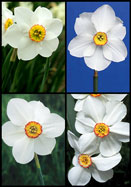
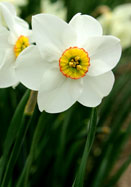
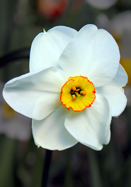
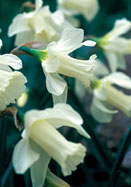
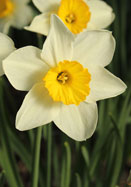
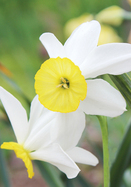
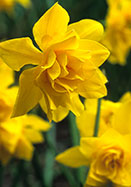
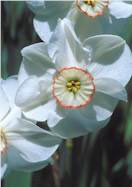
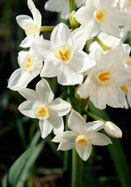
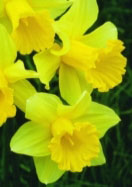
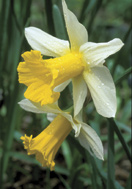
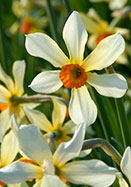
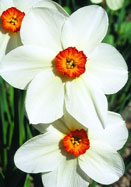
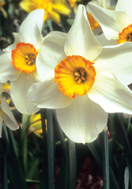
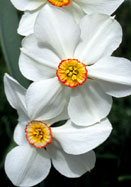
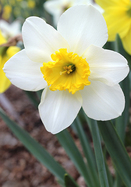
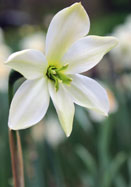
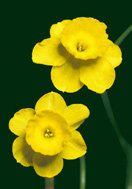
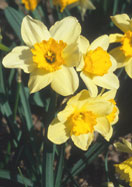
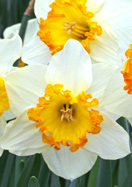
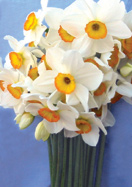
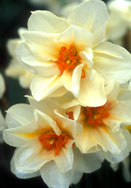
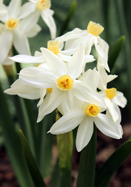
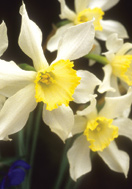
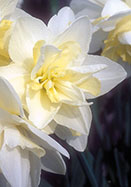
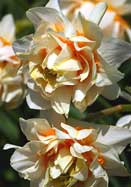
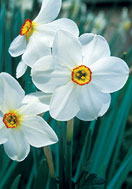
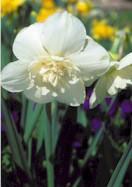
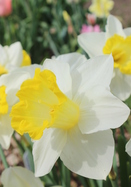
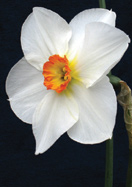
With their wildflower grace, colorful “eyes,” and spicy perfume, daffodils bred from Narcissus poeticus were especially popular during the Arts and Crafts era of the late 19th and early 20th centuries. Explore the simple elegance of 4 of the greatest of these all-but-lost poets: 1 ‘Horace’ (from 1894), 1 ‘Glory of Lisse’ (1901), 1 ‘Stilton’ (1909), and 1 ‘Cantabile’ (1932). For zones 4a-7a(9bWC), from Holland.
Last offered in 2016. If you’d like to be notified the next time we offer this treasure, click to sign up for an email alert.
|
|
|
|
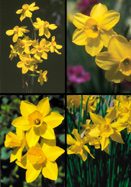
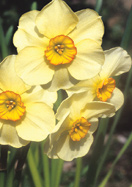
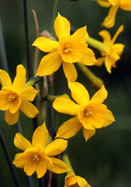
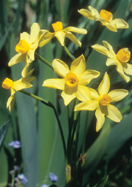
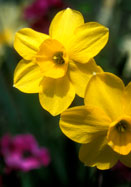
Jonquils and Southern gardens go together like biscuits and gravy. We’ll send you 4 of the best, all easy, fragrant, and cherished – 3 N. jonquilla ‘Early Louisiana’, 3 true ‘Campernelle’, 3 ‘Sweetness’, and 3 ‘Trevithian’. 12 bulbs total, for zones 6b-8b(10bWC).
Last offered in 2016. If you’d like to be notified the next time we offer this treasure, click to sign up for an email alert.
|
|
|
|
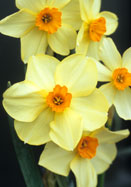
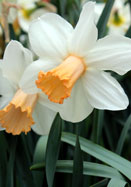
With an amber-orange cup ringed by golden-white petals like “the soft taffeta silk which in the old days was known as sarsenet” (Wayside Gardens, 1936), this elegant poetaz is now one of the oldest of that hardy, cluster-flowered clan. And its fragrance is delicious! 8 Y-O 14-16”, zones 6a-8a(10bWC), from Holland. Last offered in 2018. ‘Admiration’ is now commercially extinct.
|
|
|
|
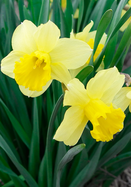
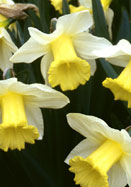
Introduced 100 years ago during the Golden Age of Aviation, ‘Aerolite’ shines with a bright yellow cup framed by a lighter primrose perianth. “Most desirable for cut flowers,” wrote Cecil Solly in 1946, and its bloom season pairs it nicely with hyacinths. A popular variety for many decades, now very rare, which we are able to offer thanks to the efforts of a single Midwestern collector! 2 Y-Y (Large-Cup), early-midseason, 14-16”, zones 4b-7b(9bWC), from Ohio.
Last offered in 2023. If you’d like to be notified the next time we offer this treasure, click to sign up for an email alert.
|
|
|
|
Named for the girl whose indomitable spirit lives on in her immortal diary, this exceptionally rare double combines stainless white outer petals with a heart of deep, vibrant red-orange. It’s a dazzling daffodil – and a visual metaphor for Anne herself. 4 W-O, late-mid, 18-20”, zones 4a-8a(10aWC), from Holland. Last offered in 2023. ‘Anne Frank’ is now commercially extinct.
|
|
|
|
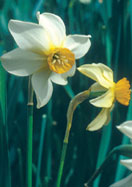
In daffodil shows across the country, this graceful little shooting star wins more ribbons for Best Historic Daffodil than any other. Its up-swept petals mature from almost-buff to white, while its dainty golden cup is kissed with orange. In the 1930s, garden diva Louise Beebe Wilder praised it as “neat and charming.” 6 W-YYO, 12-14”, zones 5b-8a(10bWC), Holland.
Last offered in 2006. We may offer it again periodically. If you’d like to be notified the next time we offer this treasure, click to sign up for an email alert.
|
|
|
|
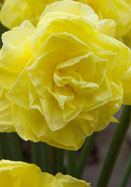
With its neatly layered petals of pale, dreamy, chiffon-yellow petals, this rare double daffodil really does look something like a camellia. It’s a sport of the legendary ‘Emperor’ and especially beautiful up close — which led connoisseur Michael Jefferson-Brown to name it one of the fifteen best daffodils for flower arrangers. 4 Y-Y, 18-20”, zones 5a-7b(9bWC), Holland.
Last offered in 2024. If you’d like to be notified the next time we offer this treasure, click to sign up for an email alert.
|
|
|
|
Beware of imitations! Our Texas-grown bulbs are the true heirloom that has made itself at home since colonial days in old gardens throughout the South – and north through zone 6 at least. (We even have a customer growing them on the shores of Lake Superior.) With their distinctively lobed cups, our true Campernelles are early, fragrant, and full of the grace and staying-power of wildflowers. You’ll have more and more every year! Aka Large Jonquil, 13 Y-Y, 10-14”, zones 6a-8b(10bWC), from Texas.
If you’d like to be notified the next time we offer this treasure, click to sign up for an email alert.
|
|
|
|
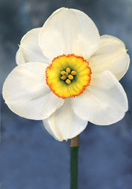
“The poeticus by which all others are judged,” says the great English daffodil grower Ron Scamp of this RHS AGM-winning classic with its sparkling petals and flawless form. For a special treat, pick it when it’s just opening and its eye is still (in the words of Michael Jefferson-Brown) “a lovely, cool mossy-green.” Pronounced “kahn-TAH-bih-lay,” 9 W-GYR, late, 18-20”, zones 4a-7a(9bWC), from Holland. Last offered in 2016. Cantabile’ is now commercially extinct.
|
|
|
|
This very rare Victorian pheasant’s eye is another treasure from the illustrious Rev. Engleheart who gave the world ‘Beersheba’, ‘Lucifer’, ‘White Lady’, and many others. In 1905, the British Saturday Review praised its petals of “driven snow,” cup edged with “deep madder,” and “heart of pure green.” 9WC-GWYR, 18-20”, zones 4a-7a(9bWC), from Holland. Last offered in 2022. ‘Cassandra’ is now commercially extinct.
|
|
|
|
With a unique look and fabulous scent, ‘Chinita’ is the love child of a pheasant’s eye and a tazetta such as Avalanche. Its flat, ribbed, golden eye is circled with orange, but what really sets it apart are its pale amber-to-cream petals. From the moment it first bloomed for us, we wanted to share it with you! 8Y-YYR, 21-23”, zones 6a-8a(10bWC), from Holland.
Last offered in 2022. If you’d like to be notified the next time we offer this treasure, click to sign up for an email alert.
|
|
|
|
Developed by William Backhouse (1807-1869), the British banker and daffodil hybridizer who brought us ‘Emperor’ and ‘Empress’, ‘C.J. Backhouse’ was hailed by Arthur Martin Kirby in 1907 as “one of the best of its class” with flowers “most attractive and distinctively coloured,” combining yellow petals with a “crown, most elongated, rich orange-yellow tinted reddish.” Backhouse must have prized it as well, for sometime before he died in 1869 he named it after his eldest son Charles James. (And if you’re wondering, ‘Mrs. R.O. Backhouse’ was bred by Sarah Dodgson who married one of William’s younger sons, Robert Ormston Backhouse.) This is a very rare variety which we are only able to offer for the first time this year thanks to the dedication and efforts of daffodil collector Drew McFarland! 2 Y-O (Large-Cup), midseason, 14-24”, zones 4b-7b(9bWC), from Ohio.
Last offered in 2025. If you’d like to be notified the next time we offer this treasure, click to sign up for an email alert.
|
|
|
|
With its demure swan’s-neck pose and “high-shouldered” petals that arch forward to embrace the trumpet, this sweet little Victorian daffodil is close kin to N. moschatus and the classic “Silver Bells” daffodil that graces so many old Southern gardens. Its lilting Irish name was the title of one of the 19th century’s most popular plays. It means, fittingly, “fair-haired girl.” 1 W-W, 10-12”, zones 5b-8a(10bWC), from Holland. Last offered in 2014. ‘Colleen Bawn’ is now commercially extinct.
|
|
|
|
With ruffled disks of orange-gold set against smooth, elegantly rounded petals of cream, this classic beauty is named for the fabulously wealthy King Croesus of Lydia who minted the world’s first coins. Plant it and you’ll be rich in beauty for years to come! 2 Y-YYO, 17-19”, zones 4a-7b(10bWC), from Holland.
Last offered in 2024. If you’d like to be notified the next time we offer this treasure, click to sign up for an email alert.
|
|
|
|
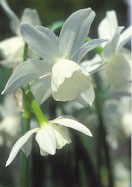
Developed by the Rev. George Engleheart, the storied British breeder who brought us ‘Beeersheba’, ‘Lucifer’, and hundreds (!) of other daffodil varieties, ‘Dawn’ has two to three flowers on each stem with delicately-reflexed white petals setting off a lemon-yellow cup. Grant Mitsch called it a “pretty and graceful little flower” and we agree! 5 W-Y (Triandrus), midseason blooming, 12-14”, zones 4b-7b(9bWC), from Holland.
Last offered in 2023. If you’d like to be notified the next time we offer this treasure, click to sign up for an email alert.
|
|
|
|
With dozens of petals neatly nested together as if in a perfect miniature rose – and just as fragrant – this tough little double daffodil has been grown and loved for over 400 years. 4 Y-Y, 10-12”, zones 6a-8b(10bWC), from Holland.
Last offered in 2025. If you’d like to be notified the next time we offer this treasure, click to sign up for an email alert.
|
|
|
|
Looking like a platinum-blond pheasant’s-eye narcissus, ‘Dreamlight’ features a wide, flat, rippled eye of champagne-white that’s perfectly set off by a narrow ribbon of orange suffused with pink. Backed by round, moon-like petals, it’s ethereal, unique, and in 2009 it won the Wister Award, the American Daffodil Society’s highest honor! 3 W-GWR, 17-19”, late-blooming, zones 5a-7b(9bWC), from Ohio. Last offered in 2022. ‘Dreamlight’ is now commercially extinct.
|
|
|
|
Nameless but thriving, ‘Early Pearl’ was rediscovered in old gardens of the Southeast’s “Spanish Moss Belt.” Early to bloom and best where summers are hot, it has starry white petals, tiny citron cups that mature to white, and a fresher scent than most tazettas. Experts believe it dates to the late 1800s. 8 W-Y, 14-16”, zones 8a-9b(11bWC), big, fat California bulbs.
Last offered in 2024. If you’d like to be notified the next time we offer this treasure, click to sign up for an email alert.
|
|
|
|
Any Top Ten list of history’s greatest daffodils would have to include this legendary trumpet. Once the world’s best-known and best-loved, it’s been “commercially extinct” for decades, preserved by just a handful of collectors — and we’re thrilled to have enough to offer it. With a deep gold trumpet and a distinctive wiggle to its softer yellow petals, it’s a daffodil for the ages. 1 Y-Y, 18-20”, zones 5a-7a(10bWC), from Ohio.
Last offered in 2024. If you’d like to be notified the next time we offer this treasure, click to sign up for an email alert.
|
|
|
|
One of the most popular daffodils of all time, this landmark beauty helped spark the modern world’s love affair with daffodils when it was introduced alongside ‘Emperor’ just after the Civil War. With pure white petals and a slender yellow trumpet, it’s dewy fresh and eternally regal. Our 2009 Bulb of the Year, 1 W-Y, 18-20”, zones 5a-7b(9bWC), from Ohio.
Last offered in 2024. If you’d like to be notified the next time we offer this treasure, click to sign up for an email alert.
|
|
|
|
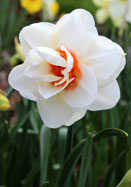
Star-like ‘Firebird’ lights up the spring garden with its long, graceful petals rippling out from a heart of fire. One of the rarest daffodils we’ve ever offered, it’s one of only four introduced by Mrs. F. Stuart Foote of Grand Rapids, Michigan, who’s also credited with prompting her furniture-mogul husband to make the worlds first coffee table. 3 W-O, 18-20”, late-mid season, zones 4a-7b(9bWC), from Holland. In 2016 our expert Dutch grower told us that he’s convinced this is actually the much older Firebrand.
|
|
|
|
To enjoy the full brilliance of this graceful antique, catch it when it first opens. Although its flat, rippled cup may not be the “solid, deep rich red” that Albert Calvert praised in his monumental 1929 Daffodil Growing for Pleasure and Profit, it’s close – and stunning. 3 W-R, 18-20”, zones 5a-7b(9bWC), from Holland. Last offered in 2022. ‘Firetail’ is now commercially extinct.
|
|
|
|
$50! At an ADS auction a few years ago, that was the winning bid for three bulbs of this vivid, sun-proof, blue-ribbon charmer that E.A. Bowles praised as the epitome of “brilliancy, gaiety, and refinement.” Though it’s definitely worth that much, you’ll note that we’re charging a LOT less. We really want you to grow it! 2 W-O, 18-20”, zones 5a-7b(9bWC), from Ohio.
Last offered in 2025. If you’d like to be notified the next time we offer this treasure, click to sign up for an email alert.
|
|
|
|
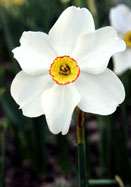
This fragrant beauty survives from the dawn of the 20th century when the wildflower grace of pheasant’s-eye narcissus made them especially popular. With snow-white petals and an eye of old gold trimmed with red, it’s named for 800-year-old Lisse, home of the world famous Keukenhof bulb gardens. 9 W-YYR, 18-20”, zones 4a-7a(9bWC), from Holland. Last offered in 2020. ‘Glory of Lisse’ is now commercially extinct.
|
|
|
|
Sublimely fragrant, this tough, free-flowering jonquil “has settled into Southern life,” says Scott Ogden in Garden Bulbs for the South. In 1930, Philadelphia master horticulturist John Wister praised its toughness, saying it “stays in bloom sometimes for two to three weeks in spite of storms or hot weather.” 7 Y-Y, 18-20” early/mid-season blooming, zones 6a-8b(10bWC), from Holland.
Last offered in 2006. If you’d like to be notified the next time we offer this treasure, click to sign up for an email alert.
|
|
|
|
Prized since the days of Napoleon, ‘Grand Monarque’ blooms in clusters of small, sweetly fragrant, white and yellow flowers. It’s “magnificent as grown on the Riviera and in Algiers,” E.A. Bowles reported in the early 1900s, and it’s especially favored today in the Mediterranean climates of the West Coast. 8 W-Y, 18-20”, zones 7b-9b(11bWC), from California. Last offered in 2005. We may offer it again periodically, or we could special order it for you.
|
|
|
|
This legendary, 18th-century tazetta is one of our most sought-after treasures. “Certainly no finer flowering bulbs are available for Southerners,” Ogden writes in Garden Bulbs for the South. “They are by far the most vigorous, persistent, and floriferous” narcissus in zones 8a-9b(11bWC). If you garden there, you want this jewel! Aka ‘Grand Primo Citroniere’, 8 W-Y,
14-16”, fat, fresh California-grown bulbs.
Last offered in 2024. If you’d like to be notified the next time we offer this treasure, click to sign up for an email alert.
|
|
|
|
Every spring in the quaint old parterre garden at Keukenhof, Holland’s wonderland of bulbs, this charming antique trumpet launches the show. And who was Henry Irving? Visit www.theirvingsociety.org.uk to learn more about the Victorian actor who still has a fan club 100 years after his death. 1 Y-Y, 15-16”, zones 4a-8b(10bWC), from Holland.
Last offered in 2022. If you’d like to be notified the next time we offer this treasure, click to sign up for an email alert.
|
|
|
|
These odd little cuties are the true Southern heirloom, not Dutch look-alikes. With funnel-shaped cups and exclamation-point petals, they may remind you of cartoon characters. Short and early, they’re not easy to please but seem to do best in gritty acid soil that bakes in summer. 13 Y-Y, 8-10”, zones 6b-8b(10bWC), from Texas. Last offered in 2009. We may offer it again periodically, or we could special order it for you.
|
|
|
|
With distinctively long bells that give it a look of languorous abundance, this post-war beauty “stands out as exceptional” among the often “rather similar” triandrus clan, says connoisseur Geoff Stebbings in Spring Bulbs. Its silky blooms are a mellow, creamy white, and the first time it bloomed here we knew we had to share it. 5 W-W, 14-16”, zones 5a-7a(10bWC), from Holland.
Last offered in 2018. Unfortunately we’ve lost our grower and haven’t found another yet who can guarantee true stock. If you’d like to be notified the next time we offer this treasure, click to sign up for an email alert.
|
|
|
|
This very rare relic from the dawn of the Golden Age of daffodils was bred by Lancashire weaver John Horsefield (whose name lost an “e” when Latinized.) It was the Model T of daffodils, revealing their enormous potential, and as late as 1907 experts were still praising it as “grand and popular.” With white petals and a rich yellow trumpet, it’s sturdy, handsome, and still awesome. 1 W-Y, 14”, zones 5a-7b(9bWC), from Holland’s greatest daffodil collector. Last offered in 2012. ‘Horsfieldii’ is now commercially extinct.
|
|
|
|
We are able to offer this very rare variety thanks to the work of a single Midwestern collector, Drew McFarland! Hybridized from ‘King Alfred’ and ‘Firebrand’ by the Cornwall politician and gardener John Charles Williams, ‘Hospodar’ has large flowers of rich, primrose yellow surrounding a fluted orange trumpet that holds its color well even in bright sun. The unusual name may be Williams’ equivalent of “Lord” or “Sovereign”, since in Eastern Europe “Hospodar” often refers to the head of a household, family, or clan. 2 Y-O (Large-Cup), early-midseason, 16-24”, zones 4b-7b(9bWC), from Ohio.
Last offered in 2024. If you’d like to be notified the next time we offer this treasure, click to sign up for an email alert.
|
|
|
|
Winner of both the ADS’s highest honor, the Wister Award, and the Royal Horticultural Society’s AGM for “outstanding excellence,” this popular daffodil opens with a broad, ruffled, yellow cup that matures to almost white. It’s tough enough to naturalize along a highway yet beautiful enough to win a place in world-class gardens from Chanticleer to Filoli. 2 W-W, 20-24”, early-mid season, zones 4a-8b(10bWC), from Holland. Last offered in 2015. Available elsewhere.
|
|
|
|
From the creator of the great Copeland family trio — ‘Irene’, ‘Mary’, and ‘Mrs. William’ — comes this rare flower with round, creamy white petals and a wonderfully ruffled cup of apricot-gold maturing to lemon. (Read the family’s story here.) Its name honors the great 17th-century diarist and author of books about everything from trees (his famous Sylva) to “sallets.” 2 W-O, early blooming, 18-20”, zones 4a-8a(10bWC), from Holland. Last offered in 2023. ‘John Evelyn’ is now commercially extinct.
|
|
|
|
“The sweetest smelling flower your grandmother grew,” says our friend Celia Jones of Sisters’ Bulb Farm near Shreveport, and for many Southerners N. jonquilla’s fragrance is the essence of spring. With clusters of nickel-sized flowers that seem made for fairies, our true, American-heirloom “French” strain blooms much earlier than the widely-offered Dutch strains. Aka Sweeties, Simplex, Cologne Bottle, and more; 13 Y-Y, 8-10”, zones 6b-8b(10bWC), from Texas.
If you’d like to be notified the next time we offer this treasure, click to sign up for an email alert.
|
|
|
|
The weirdest daffodil we’ve ever grown, and very rarely offered, this fascinating flower has six narrow, green-tinted “petaloid segments” that thrust out of the middle of its cup looking like tiny fingers or horns or tentacles. Plant it where you can appreciate it up close (and show it off), or pick a few to entertain you indoors. By Alec Gray, 4 W-Y, 18-20”, very late, zones 5a-7b(10aWC), from Holland.
Last offered in 2021. If you’d like to be notified the next time we offer this treasure, click to sign up for an email alert.
|
|
|
|
“Even more fragrant than most jonquils,” wrote ADS president George Lee of this unusually late-blooming miniature that’s as cute as, well, a baby goat. With rounded petals and an oversized cup like a hungry baby’s mouth, it was bred by Alec Gray, the 20th century’s pioneering master of miniature daffodils. 1-2 flowers per stem, 7Y-Y, 10-12”, zones 6b-8a(10bWC), from Holland’s greatest daffodil collector. Last offered in 2009. ‘Kindling’ is now commercially extinct.
|
|
|
|
This sublimely simple wildflower has graced English gardens since medieval days and inspired Wordsworth’s famous poem. It grows without care from Maine to California but is best loved in the Upper South, thriving in pastures and woods where homes once stood. Traditionally called Easter flower or buttercups in the US, it’s very early blooming, with a narrow trumpet and lighter petals that sweep gracefully forward. 13 Y-Y, 10-12”, zones 5a-8b(10bWC), from Mississippi.
Last offered in 2014. Our grower is increasing his stock and we hope to offer it again soon. If you’d like to be notified the next time we offer this treasure, click to sign up for an email alert.
|
|
|
|
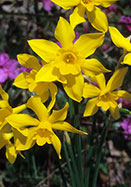
This fragrant charmer looks like a miniature, multi-flowered, soft yellow pheasant’s eye. The child of a wild jonquil and N. poeticus, it has rounded petals of palest yellow and a small, flat, golden cup that’s banded with deep orange. It’s named for a Scottish songbird and its fragrance — as you might guess from its parents — is heavenly. 7 Y-YYO, 8-12”, zones 6b-8a(10bWC), from Holland. Last offered in 2012.
|
|
|
|
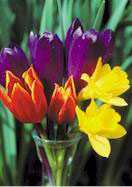
No bigger than a crocus (that’s ‘Paulus Potter’ and Tulipa schrenkii in our photo) and almost as early, this selected form of the Pyrenean mountains wildflower N. minor is so small and perfect you may have trouble believing it’s real. Its tiny, bright yellow trumpets fit anywhere and force eagerly. 1 Y-Y, 4-6”, zones 4a-7b(9bWC), from Holland. Last offered in 2004. ‘Little Gem’ is now commercially extinct.
|
|
|
|
“Save the Bulbs!” we say, and Jane Kuitems did, rescuing from oblivion the finest white daffodil of the 19th century. In the 1930s Jane’s mother worked for a florist who forced daffodils for cutflowers. She planted some at home, they multiplied like rabbits, and everyone loved them. Decades later Jane sent us a few, experts helped us identify it, and in 2004 we re-introduced this elegant grand dame — to a frenzy. 1 W-W, 14-16”, zones 4a-7b(9bWC), from Pennsylvania. Last offered in 2011.
|
|
|
|
This pixie, born of the tiny, wild N. asturiensis crossed with N. poeticus, has soft, primrose petals and a bright yellow cup touched with orange. Bred by Alec Gray, the 20th century’s pioneering breeder of miniatures, it’s too large for the show-bench today but utterly charming in the garden. A connoisseurs’ choice, it was already “very scarce” by the 1960s. 2 Y-YYO, 8-10”, zones 5a-7b(9bWC), from Holland. Last offered in 2006.
|
|
|
|
With all the intensity and glamour of a Hollywood star, this early-blooming Australian has a brilliant lemon-to-orange cup that’s extravagantly ruffled and frilled. “Turning around” daffodils from Down Under so they bloom in spring up here is an expensive process, so only the best are chosen — and ‘Marjorie’ definitely made the grade. 2W-YYO, 18-20”, zones 5a-7a(10bWC), from Holland. Last offered in 2009. ‘Marjorie Hine’ is now commercially extinct.
|
|
|
|
Though this dramatic poetaz has just two or three florets per stem, they’re so gosh darn BIG — up to 3 inches across — that you’ll only need a few stems to fill a vase. With bright, jewel-like colors and a warm perfume, ‘Martha’ can be the belle of the ball in your spring garden. 8WC-O, 21-23”, zones 6a-8a(10bWC), from California’s idyllic Carmel Valley. Last offered in 2009.
|
|
|
|
One of the most popular doubles of the 20th-century, ‘Mary’ combines a flurry of creamy white petals with shorter, frilly bits of lemon, orange, and tangerine. She’s livelier and more informal than her daffodil sister ‘Irene’ – though apparently this wasn’t true of the real Mary and Irene. For Mary’s true story, told to us by her niece, click here. 4 W-O, 16-20”, zones 4a-7b(9bWC), from Holland. Last offered in 2016. ‘Mary Copeland’ is now commercially extinct.
|
|
|
|
Prada, Bugatti, La Scala — Milan glittered in the 1930s, and outside of town millions of wild pheasant’s-eyes bloomed. This worthy namesake is, in the words of Michael Jefferson-Brown, a “tall, immaculate flower, boldly posed.” Like all pheasant’s-eyes it mingles well with the fresh foliage and early blooms of late-spring perennial borders — and its fragrance is sheer luxury. 9 W-GYR, 18-20”, zones 4a-7a(9bWC), from Ohio.
Last offered in 2025. If you’d like to be notified the next time we offer this treasure, click to sign up for an email alert.
|
|
|
|
Often the first tazetta to bloom in the new year, this sturdy pass-along plant has narrow, pointed petals that make its clustered blooms look like fistfuls of stars. As Texas bulb expert Thad Howard wrote, it’s “enduring, sweet-scented” and “deserves more respect and popularity.” 8 W-Y, 20”, zones 8a-9b(10bWC), from California.
Last offered in 2024. If you’d like to be notified the next time we offer this treasure, click to sign up for an email alert.
|
|
|
|
Known for decades as THE pink daffodil, ‘Mrs. R.O. Backhouse’ is one of the landmark bulbs of the 20th century. She’s more truly ivory and apricot, but so beautiful – a veritable sunrise for those who watch closely – that most modern pinks just can’t compare. 2 W-P, 16-18”, zones 4a-8a(10bWC), from Ohio.
Last offered in 2024. If you’d like to be notified the next time we offer this treasure, click to sign up for an email alert.
|
|
|
|
Named for the wife of one of Holland’s greatest bulb-growers – so you know it has to be good – ‘Mrs. Ernst H. Krelage’ was once sold for a whopping $162 per bulb. Lost to American gardeners for years until we reintroduced it in 2011, it’s a sturdy, buxom flower of creamy white and palest lemon. 1 W-W, 18-20”, zones 4a-8a(10bWC), Holland. Last offered in 2019. ‘Mrs. Krelage’ is now commercially extinct.
|
|
|
|
A leading light of the Victorian daffodil renaissance, this rare beauty has milk-white petals and a crinkled yellow cup that matures to creamy white ringed with pale, canary yellow. Guy Wilson, famed breeder of new daffodils, wrote in 1929, “I hope we shall not lose altogether some of the older flowers of such undeniable beauty and grace as ‘Mrs. Langtry’.” 2 W-WWY, 18-20”, zones 5a-7b(9bWC), from Holland. Last offered in 2015. Unfortunately we discovered that what we were selling as ‘Mrs. Langtry’ – from one of Holland’s greatest experts on historic bulbs – was actually something else. See both here, and then please help us spread the word!
|
|
|
|
This extra-rare, white-on-white beauty completes the Copeland Family Double-Daffodil Trifecta. Mrs. Copeland was the mother of the lovely Irene and Mary Copeland, and the wife of the greatest breeder of double daffodils the world has ever known. (Read the family’s story here.) We imported a few bulbs of ‘Mrs. Copeland’ from Australia many years ago, and ever since then we’ve been looking forward to this beautiful mother and child reunion. 4 W-W, early-mid season, 18-20”, zones 4a-7b(9bWC), from Holland.
Last offered in 2024. If you’d like to be notified the next time we offer this treasure, click to sign up for an email alert.
|
|
|
|
This exuberant double has been a cottage garden favorite for centuries, much like its fraternal twin ‘Butter and Eggs’. With whorls of cream-colored petals and ruffled bits of orange, it’s not only one of the best doubles for the South but, as E.A. Bowles wrote in the 1930s, “still grown wherever gardeners are wise enough to value old plants of reliably vigorous constitution.” 4 W-O, 16-18”, zones 5b-8b(10bWC), from Wisconsin. Last offered in 2017. Unfortunately we’ve lost our grower and haven’t found another yet who can guarantee true stock. We’ll keep searching, though, and hope to offer it again soon.
|
|
|
|
This is not your usual pheasant’s-eye! It’s the earliest blooming of that season-ending clan, two weeks ahead of the traditional pheasant’s-eye, N. p. recurvus (below). And though it’s hardy to -15° F, it also thrives in Southern heat that’s often death to its kin. With snowy white petals, a small yellow eye ringed with red-orange, and spicy fragrance. 9 W-YYR, 16-18”, zones 5a-7b(9bWC), from Holland.
Last offered in 2024. If you’d like to be notified the next time we offer this treasure, click to sign up for an email alert.
|
|
|
|
‘Papillon Blanc’ (‘White Butterfly’ in French) has delighted discerning gardeners for over half a century. A broad pure-white perianth surrounds a small, ruffled cup that begins light green/primrose and matures to ivory, and P. de Jager called this charmer “one of the finest” and “a perfect flower of great durability”. 11b W-W, midseason-late blooming, 16-18”, zones 5b-7b(10bWC), from Holland.
Last offered in 2024. If you’d like to be notified the next time we offer this treasure, click to sign up for an email alert.
|
|
|
|
True stock! Looking like prom dresses for honeybees, these tiny, exquisite double jonquils are fluffy with extra petals and swooningly fragrant. Don’t be fooled by sources that sell the much larger, much cheaper ‘Double Campernelle’ as ‘Queen Anne’s’. Although that’s a fine flower, the true ‘Queen’ is absolutely heart-stopping. 4Y-Y, 8-10”, zones 6b-8b(10bWC), from Holland’s greatest daffodil collector.
Last offered in 2014. Our grower is increasing his stock and we hope to offer it again soon. If you’d like to be notified the next time we offer this treasure, click to sign up for an email alert.
|
|
|
|
True stock! This fiery jewel won major awards in 1950, 1968, 1977, 1985, and the RHS AGM – one of gardening’s highest accolades – in 1993. With a broad, ruffled cup dipped in incandescent orange, it gives the spring garden a joyful jolt of intensity. It’s named for the historic “red” cattle of Devonshire, and we get a kick out of that, too. 2 Y-O, 24-26”, zones 5a-7b(9bWC), from Holland.
Last offered in 2015. Our grower is increasing his stock and we hope to offer it again soon. If you’d like to be notified the next time we offer this treasure, click to sign up for an email alert.
|
|
|
|
Winner of the Wister Award, the ADS’s highest honor, this Cornish beauty blooms vigorously from Canada to the Gulf. As Bill Finch of The Mobile Press-Register says, it’s “perfectly sculpted,” and with its slender proportions it always seems to blend in beautifully. 2 Y-Y, 16-18”, zones 4b-9a(11bWC), from Ohio.
Last offered in 2023. If you’d like to be notified the next time we offer this treasure, click to sign up for an email alert.
|
|
|
|
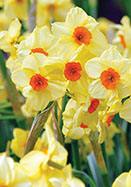
Bright, fragrant, and charming, this old poetaz “thoroughly deserves its wide popularity,” wrote daffodil expert Michael Jefferson-Brown in 1951, and it remained a favorite throughout the century. With primrose petals and a tangerine cup, it was bred by the great P.D. Williams of Cornwall. 8 Y-O, mid-late blooming, 18-20”, zones 5b-8b(10bWC), from Holland.
Last offered in 2023. If you’d like to be notified the next time we offer this treasure, click to sign up for an email alert.
|
|
|
|
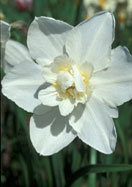
Named for the curly-haired moppet who brightened spirits during the Great Depression, this award-winning double is more commonly known as ‘Snowball’ today. With an ivory ruff of outer petals and a center rosette touched by sunshine, it’s informal, refreshing, and lightly scented. 4 W-W, 18-20” late-middle blooming, zones 4a-7b(9bWC), from Holland. Last offered in 2009. ‘Shirley Temple’ is now commercially extinct.
|
|
|
|
An improved ‘Thalia’ (is that possible?), this rare, silky-smooth beauty has a creamy white cup and starry petals that arch back like ballet dancers. “Most graceful,” wrote McFarland in his 1938 best-seller Garden Bulbs in Color, and “just about perfection.” We think you’ll agree. 5 W-W, 14-16”, zones 5a-7a(10bWC), from Holland. Last offered in 2005.
|
|
|
|
Rarest, indeed! We can’t find anyone else in the world who’s offering this classic poet’s narcissus by Northern Ireland’s immortal Guy Wilson – and who knows when we’ll be able to offer it again? As sturdy as a pint of Guinness, it has velvety white petals and a golden eye ringed in scarlet. 9 W-GOR, late blooming, 14-18”, zones 4a-7a(9bWC), from Holland. Last offered in 2015. A couple of friends in the ADS have questioned the authenticity of ‘Sidelight’ (which came to us from one of the Netherlands’ greatest daffodil collectors), so we’ve stopped selling it while we investigate further.
|
|
|
|
Don’t be confused! This rare beauty is NOT just for the South. Its name refers to the Southern Hemisphere – New Zealand to be exact – where it was bred by the esteemed Sir Algernon P.W. Thomas. With a frilled trumpet of an unusual, soft, “buff yellow” set against ivory white petals, it’s subtle but a favorite of ours – and we hope you’ll give it a try. 2W-Y, 16-18”, zones 5a-8a(10aWC), from Holland. Last offered in 2009.
|
|
|
|
A familiar relic in old gardens from Williamsburg to Yakima, ‘Stella’ is a graceful, enduring flower with a crinkled cup and wavy petals of primrose to white. Until recently it was widely mis-identified in the US as ‘Sir Watkin’. (please help us set the record straight), but there’s no doubt about this: ‘Stella’ is terrific. 2 W-Y, 16-18”, zones 5a-8b(10bWC), from Louisiana.
Last offered in 2018. Unfortunately our grower lost his stock and we haven’t found another yet who can guarantee true stock. If you’d like to be notified the next time we offer this treasure, click to sign up for an email alert.
|
|
|
|
Bred by Devonshire nurseryman E.B. Champernowne, the man who gave the world ‘Red Devon’, this much rarer daffodil survives from the Golden Age of pheasant’s-eyes. We have just 100 bulbs this year from one of Holland’s greatest daffodil collectors, and it could be years before he has any more to share with us, so get it while you can! 9 W-YYR, late blooming, 14-16”, zones 4a-7a(9bWC).
Last offered in 2024. If you’d like to be notified the next time we offer this treasure, click to sign up for an email alert.
|
|
|
|
With white and pale yellow petals, this is the much rarer, towheaded cousin of ‘Butter and Eggs’ (aka ‘Golden Phoenix’) and ‘Eggs and Bacon’ (aka ‘Orange Phoenix’). “Very chaste and beautiful,” said the Barr and Sons catalog of 1907, “much prized for bouquets.” Its folk name refers to a dessert of coddled (gently stewed or baked) coddlins (green or cooking apples) served with sweet cream. Aka ‘Silver Phoenix’, 4 W-Y, mid-season blooming, 18-20”, zones 5b-8a(10aWC), from Holland. Last offered in 2023. ‘Sulphur Phoenix’ is now commercially extinct.
|
|
|
|
As lovely as its name, this rare, creamy white double has a distinctive shape. Six single outer petals frame a short central rosette all ruffled and frilled like a tiny carnation. It was bred by one of the 20th-century’s greatest daffodil connoisseurs at Scotland’s romantic Brodie Castle, where you can still see it growing today. 4 W-W, 16-18”, zones 5a-7b(9bWC), from Holland. ‘Swansdown’ is now commercially extinct.
|
|
|
|
From the era of the Chordettes' "Mr. Sandman" and The Dells' "Oh What A Night" comes this cheerful mid-century beauty. A ring of creamy white petals frames the ruffled lemon-yellow cup edged with gold – which on closer look is banded with a reprise of the outer white! With its large blossoms on sturdy stems, ‘Sweeet Harmony’ will indeed add lovely notes to your spring symphony. 2 W-WWY, 14-18”, zones 4b-7b(10bWC), from Holland.
Last offered in 2024. If you’d like to be notified the next time we offer this treasure, click to sign up for an email alert.
|
|
|
|
An enduring, cottage-garden classic in the South, this tough little wildflower was once painted by Redouté for Napoleon’s garden-loving Empress Josephine. It’s a wild cross of N. jonquilla and N. tazetta – so of course it’s fragrant – and through the years its many names have included ‘Etoile d’Or’ and “the Cowslip Cupped.” 13 Y-Y, 16-18”, zones 6b-8b(10bWC), from Texas. Last offered in 2010.
|
|
|
|
“Pre-eminent” and “breath-taking,” Scott Ogden raves about this “refined, modern Campernelle” in Garden Bulbs for the South. It’s “stunningly fragrant,” he says, and – maybe best of all – a few bulbs “will multiply tenfold in three or four years.” With 2-3 neatly rounded flowers per stem, its late-mid blooms extend the jonquil season’s joys. 7 Y-Y, 18-20”, zones 6a-8b(10bWC), from Holland. Last offered in 2017. ‘Trevithian’ seems to be commercially extinct, but we’ll keep searching for it!
|
|
|
|
Since the Middle Ages, mace-carrying vergers have led the grandest processions, hence the name of this majestic daffodil which looks like a pheasant’s-eye but blooms weeks earlier. With stainless petals and a cup as brilliant as a cathedral window, it’s a daffodil to look forward to year after year after year. 3W-R, 18-20”, zones 4a-7b(9bWC), from Holland. Last offered in 2013.
|
|
|
|
Named for the Queen and “especially noted for its vanilla-like perfume,” this cream and gold Victorian trumpet was a favorite for decades in the flower markets of London (Kirby, 1909). Its petals are gracefully waved and its bright trumpet is richly frilled. In the 1920s, one bulb of ‘Victoria’ which bloomed with its trumpet split into strips became the beginning of modern split-corona daffodils. 1 W-Y, 18-20” early blooming, zones 5a-7b(9bWC) from Holland. Last offered in 2005. We lost our grower and haven’t found another who offers authentic stock.
|
|
|
|
“Nature’s first green is gold,” Robert Frost wrote, and it’s the vivid green deep in the cup of this great little jonquil that sets it apart, giving its lemony flowers a distinct, fresh, spring-time feeling. Named for a small olive-green songbird, it was bred by America’s greatest daffodil breeder, Grant Mitsch, who was also an avid birder. 7 Y-GYY, 9-12” very late blooming, zones 6a-8b(10bWC), from Holland. Last offered in 2021. ‘Vireo’ is now commercially extinct.
|
|
|
|
We are glad to be able to offer this year another very rare variety saved by daffodil collector Drew McFarland of Beinn Sloidh Farm. The Scottish breeder of record, “The Brodie of Brodie”, was otherwise known as Ian Brodie, 24th Laird of Brodie, who in the late 19th and early 20th centuries was internationally known for the fine daffodil hybrids he produced. ‘White Nile’ was described by Albert Frederick Calvert in 1929 as one “of the most beautiful daffodils of the present day…there is something intrinsically well bred, refined and charming in the pose, finish, and carriage of the flower” which has a circlet of snow white petals surrounding a trumpet of pale primrose-yellow that “passes to pure white in the sunshine.” 2 W-W (Large-Cup), early-midseason, 14-24”, zones 4b-7b(9bWC), from Ohio.
Last offered in 2025. If you’d like to be notified the next time we offer this treasure, click to sign up for an email alert.
|
|