Though preservation is our mission, bulbs drop out of our catalog every year.
Sometimes it’s because the harvest was too small. Sometimes it’s because they’re widely available elsewhere and don’t need our help. And sometimes it’s because we’ve lost our only known source due to severe weather (cold, drought, etc.), health problems (a debilitating stroke), or economic woes (small farmers are always at risk).
The good news is that, in time, we’re often able to return these bulbs to our catalog. So here’s a list of many we’ve offered in the past. For an alert the moment they’re available again, subscribe to our free email newsletter. Or to find a similar bulb, try our easy Advanced Bulb Search.
|
|
|
|
|
|
|
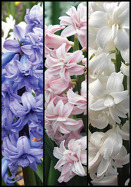
Bursting with extra petals, double hyacinths were once the most prized. Rediscover their antique charms with this sampler of 3 unique jewels: ‘Madame Sophie’, ‘Chestnut Flower’, and ‘General Kohler’. Save the Doubles! For zones 5a-8a(10bWC). For 2, 3, or more of each, order additional samplers.
|
|
|
|
The subtle, intriguingly different color of this 1950s gem isn’t pink or lavender but something beautifully in-between. Unusual colors have little place in the mass market, though, and its acreage has been plummeting. To help, just grow it! Zones 5a-8a(10bWC). 5a-8a(10bWC) Last offered in 2007. ‘Amethyst’ is now commercially extinct.
|
|
|
|
Can “obsolete” be a good thing? We think so! Dropped from the International Register in 1954, this “obsolete” beauty is well-named. It’s an ethereal soft pink, paler than ‘Lady Derby’ and brimming with the dawning light of spring. Alan Shipp of the UK National Collection dates it to the early 1900s, but its history is obscure and if you find it in any old books or catalogs, we’d love to hear from you. Zones 5a-8a(10bWC), from England. Last offered in 2006. ‘Apple Blossom’ is now commercially extinct.
|
|
|
|
We were shocked when the last Dutch grower abandoned this great Victorian favorite, because in our garden it returns and reblooms better than any other hyacinth. Now thanks to Alan Shipp, the Noah of hyacinths, it’s back! 10-12”, zones 5a-7b(9bWC), from England.
Last offered in 2022. If you’d like to be notified the next time we offer this treasure, click to sign up for an email alert.
|
|
|
|
After the fall of the Iron Curtain, a few bulbs of this horticultural refugee came to the UK National Collection from a beleaguered public garden in Lithuania, a garden that despite all sorts of difficulties had managed to preserve a remarkable collection of antique hyacinths. Tough and vigorous, it sports blue-purple petals that are deeper in the center shading to almost silver at the edges. Russian records date it to 1920. Zones 5a-8a(10bWC), from England. Last offered in 2006. ‘Blue Diamond’ is now commercially extinct.
|
|
|
|
“Blue giants” are the brightest stars in the universe, and the radiant, pearly-blue flowers of this Depression-era classic make it a worthy namesake. We’ve also found it extra easy to force. 10-12”, zones 5a-8a(10bWC), from Holland. Last offered in 2020. ‘Blue Giant’ is now commercially extinct.
|
|
|
|
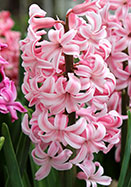
The starry, overstuffed florets of this Victorian double are a lovely “dawn pink.” Though double hyacinths were once the most sought after (learn more), today only a handful survive – and ‘Chestnut Flower’ is one of the best. 10-12”, zones 5a-8a(10bWC), from Holland.
Last offered in 2022. If you’d like to be notified the next time we offer this treasure, click to sign up for an email alert.
|
|
|
|
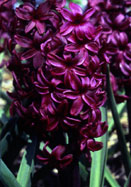
One of our all-time favorite hyacinths, ‘Distinction’ has dark maroon, “beet-root” blossoms that are stunning amid spring’s pastels. Its small size — about half that of most hyacinths — reflects its age and makes it especially well-suited for forcing. 8-10”, zones 5a-8a(10bWC), from Holland. We were heart-broken when this unique hyacinth suddenly went “commercially extinct” in 1999, and we long for the day when the small supply being nurtured for us by Alan Shipp of the UK National Collection is ready for sale.
|
|
|
|
The rarest hyacinth we’ve ever offered, this extraordinary relic was preserved by a small botanic garden in Lithuania. Although its name was lost ages ago, it looks a lot like ‘Ophir’ pictured in Robert Sweet’s The Florist’s Guide and Cultivator’s Directory of 1827-32, and it’s tall and late-blooming like ‘Ophir’ was. “I can’t be 100% certain,” expert Alan Shipp told us, “but as yellow hyacinths didn’t appear until about 1770, and there were never more than a few double yellows, chances are this really is ‘Ophir’.” Whatever its name, we’re thrilled to have a very few to offer you! 11-12”, zones 5a-8a(10bWC), from England.
Last offered in 2022. If you’d like to be notified the next time we offer this treasure, click to sign up for an email alert.
|
|
|
|
With long outer petals that swoop back and curl like those of a turk’s-cap lily, and shorter inner petals crimped into a squiggly rosette, this is one of the most interesting – and rarest – of the Victorian doubles. 10-12”, zones 5a-8a(10bWC), from the British National Collection.
Last offered in 2022. If you’d like to be notified the next time we offer this treasure, click to sign up for an email alert.
|
|
|
|
The opulent, lavender-blue bells of this rare double look as if they’ve been sculpted out of Bavarian sugar-frosting. Once discarded as freaks, double hyacinths rocketed into vogue in the early 1700s and remained the world’s most popular bulb for 150 years. 10-12”, zones 5a-8a(10bWC), from Holland.
Last offered in 2022. If you’d like to be notified the next time we offer this treasure, click to sign up for an email alert.
|
|
|
|
Extinct? That’s what the experts thought. But then Alan Shipp of the UK National Collection got a surprise phone call from the Lithuanian ambassador’s wife and before long a box full of old hyacinths arrived that had been preserved by a botanic garden behind the Iron Curtain, including this Victorian beauty. With a “large truss of delicate rose,” ‘Gigantea’ — which no longer seems very giant — was the most expensive single hyacinth in the 1870 catalog of the Olm Brothers of Springfield, MA. Zones 5a-7b(9bWC), from England.
Last offered in 2016. If you’d like to be notified the next time we offer this treasure, click to sign up for an email alert.
|
|
|
|
Although once enormously popular, double “eyed” hyacinths were all thought to be lost until this ultra-rare survivor was rediscovered in a tiny village in Romania at the end of the 20th century. After painstakingly nurturing it for years, our good friend Alan Shipp finally has a few to share, so here’s your chance to grow something that – if you’re like us – is sure to get your heart pounding. White with a rose-colored eye, more than 250 years old, and truly unique. 8-10”, zones 5a-8a(9bWC), from England.
Last offered in 2022. If you’d like to be notified the next time we offer this treasure, click to sign up for an email alert.
|
|
|
|
‘Grace Darling’ is named for the brave young daughter of a lighthouse keeper who rowed out with him in a raging storm to rescue shipwreck survivors. Her story captured the imagination of the Victorian age and before long people everywhere were singing songs and hanging lithographs of Grace on their parlor walls. Her namesake hyacinth is a lovely blue-purple, soft but vibrant (how fitting!). Though its date of introduction is unclear, Alan Shipp of the UK National Collection assures us it is “very old.” Zones 5a-7b(9bWC), from England.
Last offered in 2021. If you’d like to be notified the next time we offer this treasure, click to sign up for an email alert.
|
|
|
|
Although far from showy, this is the oldest traditional hyacinth available today. Sold in the US by 1830, it was praised in 1894 for its “large thick bells” of “charming rosy or blush white.” By the 1950s it was thought to be extinct but it survived in a small botanic garden in Lithuania, and after the fall of the Iron Curtain a few bulbs made their way to Alan Shipp at the UK National Collection – and eventually here. 10-12”, zones 5a-7b(9bWC), from England.
Last offered in 2022. If you’d like to be notified the next time we offer this treasure, click to sign up for an email alert.
|
|
|
|
The embodiment of spring’s silvery blue skies, this heavenly hyacinth is old enough to have been grown by Florence Nightingale and Charles Dickens. 10-12”, zones 5a-8a(10bWC), from our English friend Alan Shipp, the Noah of hyacinths.
Last offered in 2022. If you’d like to be notified the next time we offer this treasure, click to sign up for an email alert.
|
|
|
|
Small and cute, with double, pug-faced florets of vivid rose, ‘Hollyhock’ is unmistakably antique. Always the last hyacinth to bloom, it extends the fragrant season. 8-10”, zones 5a-8a(10bWC), from Holland. Last offered in 2019.
|
|
|
|
Although most hyacinths today are a bit stout, this fabulous ‘King’ retains the narrow, pillar-like shape that was the norm long ago. Its amazing color, though, is what has preserved it – a deep, rich, dark purple that’s as satisfying as the darkest chocolate. 10-12”, zones 5a-8a(10bWC), from the UK National Collection.
Last offered in 2022. If you’d like to be notified the next time we offer this treasure, click to sign up for an email alert.
|
|
|
|
This soft, apple-blossom pink mingles happily with everything in the garden, and it’s so easy to force that we think everyone should try it. Our impossibly easy, paper-bag-in-the-fridge instructions will show you how. 10-12”, zones 5a-8a(10bWC), from Holland. Last offered in 2018. ‘Lady Derby’ is now commercially extinct.
|
|
|
|
A favorite for almost 150 years, this warm white is one of the most perennial hyacinths in our garden and extra easy to force. Our impossibly easy, paper-bag-in-the-fridge instructions will show you how. 10-12”, zones 5a-8a(10bWC), from the UK National Collection.
Last offered in 2022. If you’d like to be notified the next time we offer this treasure, click to sign up for an email alert.
|
|
|
|
One of our all-time favorite hyacinths, ‘Lord Balfour’ is an unusual, old-fashioned color that’s hard to describe but easy to love. It’s officially “wine-colored violet,” but we’d call it ‘old rose shading to silver” or maybe ‘raspberries at twilight touched with frost.” We were heart-broken when it went commercially extinct in 1999, but thanks to Alan Shipp of the UK National Collection it’s back! Exceptionally rare, zones 5a-7b(9bWC).
Last offered in 2013. If you’d like to be notified the next time we offer this treasure, click to sign up for an email alert.
|
|
|
|
An intricately carved ivory relic, a flurry of fat snowflakes, a bed piled high with down pillows – that’s double ‘Madame Sophie’. How can white look so voluptuous? 10-12”, zones 5a-8a(10bWC), from Holland. Last offered in 2020. ‘Madame Sophie’ is now commercially extinct.
|
|
|
|
Midway between soft pink ‘Lady Derby’ and intense ‘Vuurbaak’ is this rosy mid-pink hyacinth that’s been a favorite since the days of Marconi’s amazing new “wireless telegraphy.” 10-12”, zones 5a-8a(10bWC), from Holland. Last offered in 2007. ‘Marconi’ is now commercially extinct.
|
|
|
|
Our customers send us love-letters about ‘Marie.’ A deep, rich indigo purple, it was one of the oldest traditional hyacinth varieties grown in Dutch bulb fields until 2016 when it went commercially extinct. Lucky for us, Alan Shipp was able to get his hands on a few bulbs and now we're able to offer them to you! 10-12”, zones 5a-8a(10bWC), from the UK National Collection.
Last offered in 2020. If you’d like to be notified the next time we offer this treasure, click to sign up for an email alert.
|
|
|
|
Black is beautiful, and this astonishing hyacinth – named in honor of the Victorian king of Ethiopia – is an intense indigo-purple shading to absolute BLACK. Although it went commercially extinct in Holland in 2001, most years we get a handful of bulbs from Alan Shipp of the UK National Collection. 10-12”, zones 5a-7b(9bWC), from England.
Last offered in 2022. If you’d like to be notified the next time we offer this treasure, click to sign up for an email alert.
|
|
|
|
Named after the Greek-mythic son of Zeus and Europa, ‘Minos’ brings a touch of mystery to the hyacinth bed. He was the king of Crete while alive and a judge in the underworld after his death, and his fragrant namesake can be as blue as the Aegean sea or a deeper lilac-blue that hints of eternal mysteries. 8-12”, zones 5a-8a(10bWC), from Holland.
Last offered in 2024. If you’d like to be notified the next time we offer this treasure, click to sign up for an email alert.
|
|
|
|
The unusual, old-fashioned color of this rare hyacinth sets it apart. It’s a misty puplish-rose, deeper in the center of the petals, paler at the edges, like raspberry ice cream swirled with raspberry sorbet. 8-10”, zones 5a-8a(10bWC), from the UK National Collection of Hyacinths.
Last offered in 2022. If you’d like to be notified the next time we offer this treasure, click to sign up for an email alert.
|
|
|
|
This Victorian jewel went “commercially extinct” years ago, but Alan Shipp of the UK National Collection has been nurturing it for us, and for the first time since 2010 we once again have a handful of bulbs to offer. Its name translates as “Orange Above All,” a nod to Holland’s royal House of Orange and part of a traditional Dutch cheer that ends with “long live the Queen!” Rosier than ‘Gipsy Queen’, it’s especially beautiful combined with purple hyacinths. 10-12”, zones 5a-7b(9bWC), from England.
Last offered in 2021. If you’d like to be notified the next time we offer this treasure, click to sign up for an email alert.
|
|
|
|
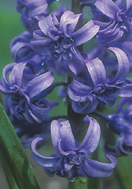
A shimmering, silvery blue-purple like antique pewter — or pearls — this Victorian relic was last harvested in the Netherlands in 2000. To preserve it, we sent a boxful of those final bulbs to Alan Shipp, holder of the UK National Collection, and now you can enjoy the happy fruits of our partnership! Learn more. 10-12”, zones 5a-7b(9bWC), from England.
Last offered in 2020. If you’d like to be notified the next time we offer this treasure, click to sign up for an email alert.
|
|
|
|
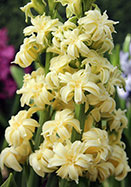
Last offered in 2004 when the last Dutch farmer quit growing it, this charming little prince is finally available again thanks to Alan Shipp of the National Collection of Hyacinths. Smaller and more buttery yellow than ‘City of Haarlem’, it glows warmly and smells lovely. Very limited supply, 8-10” Zones 5a-8a(10bWC), from England. Last offered in 2013. ‘Prins Hendrik’ is now commercially extinct.
|
|
|
|
Last offered in 2004 when it went “commercially extinct” in the Netherlands, this pastel princess has been nurtured for us since then by Alan Shipp of the UK National Collection. Although we sell a ton of ‘Gipsy Queen’ every year, the ‘Prinses’ is even prettier — a unique mix of peaches and honey, ripe apricots with a shimmer of gold. 10-12”, zones 5a-8a(10bWC), from England.
Last offered in 2013. If you’d like to be notified the next time we offer this treasure, click to sign up for an email alert.
|
|
|
|
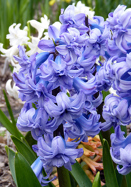
Although this soft, silvery blue charmer went “commercially extinct” in 2009, our friend Alan Shipp of the UK National Collection has been nurturing a small supply of it for us ever since. You’ll be glad you helped him save it! 10-12”, zones 5a-7b(9bWC), from England.
Last offered in 2022. If you’d like to be notified the next time we offer this treasure, click to sign up for an email alert.
|
|
|
|
One of our most sought-after bulbs, this graceful, cinnamon-scented wildflower multiplies happily year after year. It’s been passed along since colonial days, and though counterfeits are rife, ours from the Hortus Bulborum are 100% true. Slightly less cold-hardy than regular hyacinths – zones 6a-8a(10bWC), 8-10”.
Last offered in 2023. If you’d like to be notified the next time we offer this treasure, click to sign up for an email alert.
|
|
|
|
Just a bit darker than the blue Romans we get from the Hortus, with slightly wider petals and an almost chocolate-colored stem, this fragrant, steadily multiplying charmer comes to us from Alan Shipp of the UK National Hyacinth Collection. A bit less cold-hardy than regular hyacinths: zones 6a-8a(10bWC), 8-10”.
Last offered in 2022. If you’d like to be notified the next time we offer this treasure, click to sign up for an email alert.
|
|
|
|
Soft, silvery blue tinted with lavender, ‘Sky Jacket’ glows when touched by spring sunlight. Although nearly 2500 acres of hyacinths are grown in the Netherlands, only 5 are devoted to this once leading variety. 10-12”, zones 5a-8a(10bWC), from Holland.
Last offered in 2022. If you’d like to be notified the next time we offer this treasure, click to sign up for an email alert.
|
|
|
|
Fairy or multiflora hyacinths were developed in the 1940s by crossing Roman hyacinths with traditional hyacinths to yield something in between: varieties like ‘Snow White’ that bloom with multiple stalks of informal, loosely-arranged flowers. Like Romans, they bloom earlier (making them popular for Christmas forcing), multiply vigorously, and look utterly natural in the garden. Early spring blooming, 10-12”, zones 5b-8a(9aWC), from the Hortus. Last offered in 2008. ‘Snow White’ is now commercially extinct.
|
|
|
|
When our friend Alan Shipp described this variety as being “a lovely lilac and one of my favourites,” we knew we had to have it! Its unusual color will add delightful accents to your spring bouquets while its sweet fragrance enchants your nose. As Alan told us, “You will love it!” 8-12”, zones 5a-8a(10bWC), from Holland.
Last offered in 2025. If you’d like to be notified the next time we offer this treasure, click to sign up for an email alert.
|
|
|
|
Favorites of the Victorians, so-called “red” hyacinths like this ‘Fire Beacon’ are actually deep, deep rose – the Tyrian purple of ancient times – and offer a dramatic counterpoint to spring’s many pastels. 10-12”, zones 5a-8a(10bWC), from Holland. Last offered in 2020. ‘Vuurbaak’ is now commercially extinct.
|
|