
Old House Gardens
From America’s Expert Source for Heirloom Flower Bulbs
My Basket
My Basket

All bulbs for spring 2013 are SOLD OUT. Order for NEXT spring starting June 1.

Page 3 of Heirloom Gladiolus Bulbs       << Previous 1 2 3
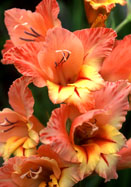
STARFACE, 1960        Rarest
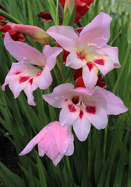
This just might be the most beautiful glad we’ve ever grown. Charmingly small-flowered, it has upper petals of dappled apricot and lower petals of pale yellow spiked with ruby. Victorian gardeners loved patterned glads like this, and we say it’s high time for a revival! 3 feet, from Maine and our Ann Arbor micro-farms. Chart to compare.
SGL35SOLD OUT1/$5.503/$155/$23.5010/$4425/$99
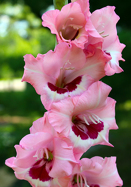
WHITE GODDESS, 1948
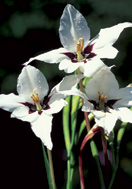
This luminous beauty is one of very few glads from the 1940s still grown in Dutch bulb fields today, a reflection of its outstanding quality. Its ruffled florets recall that famous movie scene where Marilyn Monroe’s white skirt suddenly billows up all around her – a timeless classic. 4 feet, from Holland. Chart to compare.
SGL28SOLD OUT5/$5.7510/$1125/$2550/$46100/$85

WHY GROW GLADS? They make luscious, long-lasting cut-flowers. They add dramatic spikes of color to the garden. And they multiply and store so easily (if you feel like it; it’s NOT a moral imperative!), you’ll soon have many more.

SMALL IS BEAUTIFUL – More and more gardeners today are rediscovering the charms of species and small-flowered glads. In 2006, the Brooklyn Botanic Garden asked Scott to extol his favorites in an article titled “Glads for Glad-Haters.”

GLADIOLUS HISTORY – The first hybrid glads appeared in 1837, and Victorian gardeners – including Monet and Gertrude Jekyll – loved them. Sadly, of the thousands introduced since then, 99% have disappeared and today it’s very difficult to find any survivors from before the 1940s. With the Old-Timers Guild of the North American Gladiolus Council, though, we’re building up stock of some for future catalogs.

GLADIOLUS ARCHIVES – For customer tips and raves, the stories behind the bulbs, links and books, history, news, and more, see our Gladiolus Newsletter Archives.

TIPS FOR SUCCESS – Glads are easy to grow, doing best in full sun and well-drained soil. Most often grown as annuals, they are perennial in zones 7 and warmer – and often return in zones 6 and even 5 when well mulched. They are the easiest bulb to dig and store (if you want to), and we’ll send complete instructions.

PLANTING & CARE – Plant after danger of frost is past – when you’d plant tomatoes. Glads planted in cold soils may rot.

For a succession of bloom, follow old-time advice and soak some corms before planting to speed them into growth and bloom. Or plant a few every week or two till the end of early summer (for example, late June in zone 5).

Pick a sunny site. Glads are easy and adaptable, but loose, fertile, well-drained soil with a pH of 6.5 to 6.8 is ideal for them. Avoid heavy soils that stay wet. Plant 4-6 inches apart and 2-6 inches deep. Shallow planting gives the corms warmer soil to spur growth but it may lead to a need for staking. To help avoid this, mound soil 2-3 inches around the base of the stalk later, before bloom.

Water once, but then unless it’s very dry, wait till growth emerges before beginning to water regularly and deeply enough to reach the corm. Expert glad-growers often recommend mulching to maintain more even moisture. Fertilize when growth begins and again after cutting flowers, ideally with a liquid fertilizer. Don’t overdo it, though. Too little is better than too much.

Glads do well in pots, too. When they bloom you can set them in the border where needed à la Gertrude Jekyll.

THRIPS are one of the few pests that bother glads. They’re almost invisible but they can be devastating. Learn more.

WINTER CARE – In zones 8 and warmer (lows to 10-F), glads can stay in the ground year around. Even in much colder zones you may want to experiment. We’ve had glads bloom after wintering outdoors with temperatures well below zero. A thick, light mulch and good snow cover will increase their chances.

Where they’re not winter hardy, glads are one of the easiest bulbs to store over the winter (but please remember, it’s NOT required by law in any state!). Dig them five to six weeks after flowering (or wait till after the first frost). Immediately cut the stalks off as close to the corms as possible. Avid growers often recommend a five-minute dip in a fungicide solution, but many gardeners skip this. Or you can dust them with an insecticide-fungicide, or do nothing. Air dry for a few weeks. Store loose or in mesh bags or even old nylon stockings in a cool, dry place with good air circulation, ideally at 35-45° F.

Before re-planting in the spring, break off the old, shriveled corm at the base of the new one. Any cormel/cormlet bigger than a pea may bloom the next year, and smaller ones usually grow to blooming size in another year.

To return to the beginning of Gladiolus, click here.

Page 3 of Heirloom Gladiolus Bulbs       << Previous 1 2 3
For our print catalog click here or
send $2.00 to
Old House Gardens
536 Third St., Ann Arbor, MI 48103.
phone: 734-995-1486
fax: 734-995-1687
charlie@oldhousegardens.com
OHG Catalog Cover
For our free email newsletter,
“The Friends of Old Bulbs Gazette”
with tips, news, history, &
special offers,
send us an email with
“subscribe” in the subject line to
newsletter@oldhousegardens.com.